A Malaysian doctor who was convicted of sexually assaulting a teenage girl in Queensland has had his visa restored by a tribunal after it found deporting him would cause his family “heartache and pain”.
The anaesthetist, 68, had his permanent visa mandatorily cancelled in November last year after being sentenced to 12 months’ imprisonment, to be suspended after three months, in Rockhampton Magistrates Court. In January the sentence was reduced to six months on appeal and wholly suspended.
He then appealed the visa cancellation at the Administrative Review Tribunal, which revoked the original decision last month using immigration minister Tony Burke’s Ministerial Direction 110, which has been kept in place since 2024 despite it enabling hundreds of criminals to avoid deportation.
Direction 110 requires the tribunal to take into account community protection and expectations, family violence, ties to Australia, the best interests of minor children, legal consequences, impediments if removed, and impact on Australian business interests.
ART general member Sydelle Muling anonymised the child sex offender as QNNH in her decision, where she noted that he had preyed on a young girl with whom he had “developed a relationship of friendship and trust” under the pretext of conducting a massage.
The tribunal heard that the sexual assault had a “devastating impact” on the victim, who “no longer feels safe doing everyday things” and freezes and panics when she sees men that physically resemble her abuser.
Ms Muling found that QNNH failed the character test due to the serious nature of his offending, and that the need for community protection weighed in favour of visa cancellation, but only moderately as a forensic psychiatrist had determined there was a low risk of reoffending.
She gave community expectations significant weight against revocation, but found the strength, nature and duration of QNNH’s ties to Australia and the best interests of minor children carried significant and considerable weight in favour of restoring the visa.
Ms Muling also found that QNNH “may face some practical difficulties in re-establishing himself in Malaysia”, which she found provided limited weight in favour of revoking the cancellation.
In her judgement Ms Muling noted that QNNH had been in Australia for 14 years, was married, and had two daughters, a son and a grandson in Australia. All are permanent residents except one daughter and the grandson, who are Australian citizens.
The tribunal heard that he had “contributed positively to the community through his work as a specialist medical practitioner in regional Australia”, and via his involvement with the Rockhampton Chinese Association, Rockhampton Badminton Social Group and his church community.
QNNH’s wife gave evidence that if her husband was deported she would suffer as she would be unable to relocate to Malaysia with him, and said her life was “extremely difficult without him”.
His Australian citizen daughter said in a statement that “their whole family is in a state of crippling stress and emotional exhaustion from the continued separation from [QNNH] and their ongoing fear that he might be removed from Australia”, and that deportation would “fracture their family unit permanently”.
“The Tribunal accepts that [QNNH] and his family members share a very close-knit relationship and that his removal from Australia would cause them heartache and pain,” Ms Muling noted.
“It accepts [QNNH]’s representative’s submission that [QNNH]’s family’s cohesion, stability and wellbeing are affected by [QNNH]’s continued presence in Australia and that his absence would cause them extreme hardship.
“Accordingly, the Tribunal accepts that if [QNNH] was removed from Australia, this would have a negative impact on all his family members.”
Ms Muling also found that QNNH’s two-year-old grandson would be negatively affected by “not having frequency of physical contact” and wrote that the pair had “very meaningful regular contact … consistent with the cultural significance of the grandparent relationship and familial connection”.
“The Tribunal finds there [are] other considerations which cumulatively weigh in favour of exercising the discretion to revoke the cancellation of the Applicant’s visa, including the primary considerations of strength, nature and duration of the Applicant’s ties to Australia and the best interest of minor children in Australia affected by the decision, and to a lesser extent, the other consideration related to impediments if removed,” she concluded.
The decision came in the same month as the ART used Direction 110 to allow a violent African criminal who sexually abused a three-year-old boy to stay in Australia as he would suffer “significant hardship” if forced to return to Zambia.
In June the tribunal gave a Nepalese child sex offender his visa back, and in May did the same for an African refugee who sexually abused his nine-year-old niece, because he would lose access to NDIS support for his intellectual disability if deported.
Other immigrant criminals who have been allowed to stay in Australia this year due to similar ART rulings under Direction 110 include a Chinese wife-killer, an Ethiopian rapist, an obese homosexual Indian paedophile, an Iranian drug smuggler, a killer Sri Lankan driver, and a Sudanese refugee who was jailed over the fatal stabbing of an Australian teenager.
Mr Burke has the ministerial power to personally cancel visas, a decision which cannot be challenged at the ART, and has done so multiple times since November for political reasons, resulting in the deportation of South African civil engineer Matthew Gruter for attending a peaceful police-approved protest, and Ukrainian refugee Yan Zakharin for his alleged role in an incident at Camp Sovereignty in Melbourne.
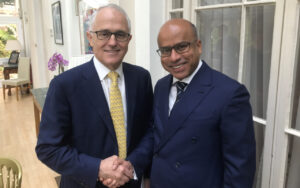
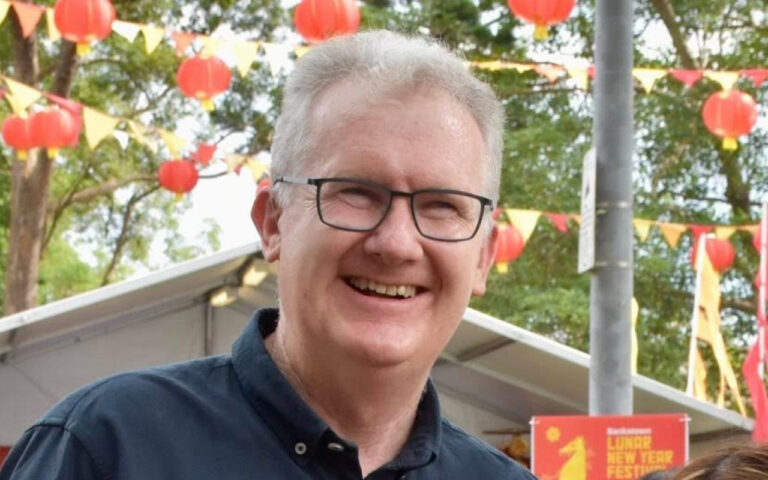
Header image: Tony Burke celebrating Lunar New Year (Facebook).