A violent schizophrenic Sudanese criminal has been given his refugee visa back by a tribunal so he can get access to support and housing under the National Disability Insurance Scheme.
The 44-year-old, who was anonymised by the Administrative Review Tribunal as JMNR, arrived in Australia in 1999, and was placed in immigration detention in 2019 after having his protection visa cancelled due to convictions for assaults, robberies and drug offences in Adelaide.
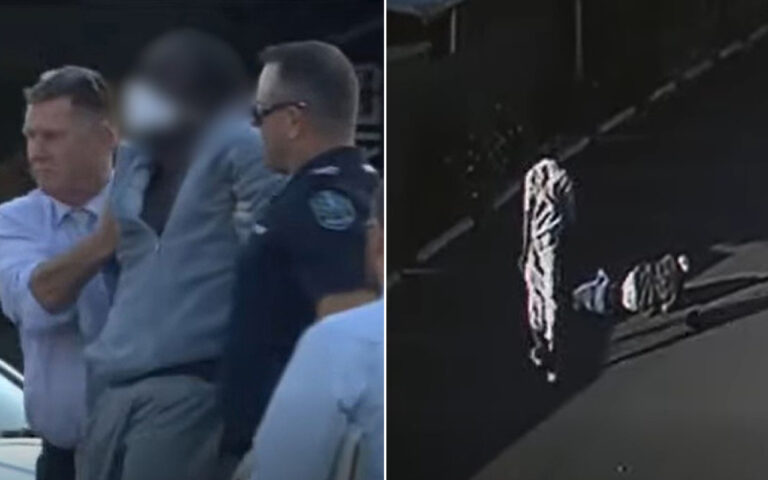
His longest sentence was three years and four months for carjacking of a 79-year-old man, who he pulled out of his car, dragged across the pavement, assaulted and nearly ran over. He then spat at police while being arrested.
He was released from immigration detention in 2023 by the Labor government after the High Court ruled a “stateless” Rohingya child rapist called NZYQ could not be held indefinitely, and was granted a Bridging (Pending Removal) visa (BVR) along with hundreds of other serious criminals.
JMNR then went on to commit more crimes, was convicted of some and found not guilty of others due to mental incompetence, and in December 2025 was released under a five-year supervision order.
The ART previously refused to revoke the cancellation of his visa, but a Federal Court appeal resulted in the case being sent back to the tribunal, and last month Deputy President Peter Britten-Jones ruled in JMNR’s favour, finding he could not be deported, would benefit from being on the NDIS, was a low-risk of re-offending, and had strong ties to Australia.
The decision was made using immigration minister Tony Burke’s controversial Ministerial Direction 110, which has enabled about 500 serious criminals, including killers, paedophiles and rapists, to stay in Australia.
Mr Britten-Jones found that JMNR would pose less risk to the community if his Global Special Humanitarian visa was restored than if he stayed on the BVR, and said he placed significant weight on a report by JMNR’s consultant forensic psychiatrist, Dr Cassie Smith.
Dr Smith confirmed JMNR had been a diagnosed with “chronic schizophrenia, methamphetamine and cannabis use disorder (in remission) and post-traumatic stress disorder”, was on anti-psychotic medication, and was also being treated for type 2 diabetes.
She found that his mental health was “improving”, and recommended him for a program called Survivors of Torture and Trauma (STTARS) for counselling and treatment of his post-traumatic stress disorder.
“Dr Smith has provided her expert opinion as a forensic psychiatrist that if his mental state remains stable and he receives appropriate support, the Applicant’s risk of recidivism will be low,” Mr Britten-Jones said in his judgement.
“Under cross examination, she clarified her opinion that she considers he is likely to engage and comply with future treatment and conditions and that his mental health prognosis is positive. In my opinion the likelihood of re-offending is low.”
The tribunal heard that if JMNR’s “permanent GSH visa is restored, he would be eligible for NDIS support based on his established diagnosis of schizophrenia”.
“NDIS funding would include a specialist support coordinator to assist him to manage his NDIS plan and additional funding for psychosocial supports involving between three to six hours of daily carer support, seven days per week to assist him with his identified functional deficits,” Mr Britten-Jones said.
“Another benefit of the NDIS is that it provides better access to housing. Dr Smith considers that housing stability is a very important factor in maintaining mental health stability.
“I agree that a BVR will likely impede the Applicant’s mental health improvement compared to a permanent GSH visa because of the availability of the NDIS and better housing supports.
“Proper treatment of the Applicant’s mental health is a critical factor in terms of whether the community will be adequately protected because it reduces the likelihood of reoffending by the Applicant.”
The tribunal also heard that JMNR could not be deported to Sudan because of a protection finding, and could also not be sent to a third country such as Nauru while the supervision order was in place.
Direction 110 applies to visa cancellations and requires the ART to take into account community protection and expectations, family violence, ties to Australia, the best interests of minor children, legal consequences and impediments if removed, and impact on Australian business interests.
In JMNR’s case, Mr Britten-Jones ruled that there was “very little risk of harm to the Australian community arising from either of the decisional outcomes in this matter and the difference between the decisional outcomes, in terms of risk, is marginal”.
He found that the expectations of the community weighed in favour of non-revocation because of the seriousness of the offending, but said all other considerations weighed in favour of restoring JMNR’s visa.
“One should not forget about what is best for the Applicant in terms of his treatment being more likely to be successful if he is on a permanent GSH visa instead of a BVR,” Mr Britten-Jones said.
The decision was made shorty after the ART allowed an Afghan refugee who sexually assaulted a 13-year-old boy on a Sydney bus to stay in Australia because he will face “difficulties” if he loses his visa and he has shown “deep remorse”.
Last month the ART made a similar decision in regard to a Nigerian scammer, in July restored the visa of a Malaysian doctor who was convicted of sexually assaulting a teenage girl, and allowed a Zambian who sexually abused a three-year-old boy to stay.
In June the tribunal gave a Nepalese child sex offender his visa back, and in May did the same for an African refugee who sexually abused his nine-year-old niece, because he would lose access to NDIS support for his intellectual disability if deported.
Other immigrant criminals who have been allowed to stay in Australia this year due to similar ART rulings under Direction 110 include a Chinese wife-killer, an Ethiopian rapist, an obese homosexual Indian paedophile, an Iranian drug smuggler, a killer Sri Lankan driver, and a Sudanese refugee who was jailed over the fatal stabbing of an Australian teenager.
Mr Burke has the ministerial power to personally cancel visas, a decision which cannot be challenged at the ART, and has done so multiple times since November for political reasons, resulting in the deportation of South African civil engineer Matthew Gruter for attending a peaceful police-approved protest, Ukrainian refugee Yan Zakharin for his alleged role in an incident at Camp Sovereignty in Melbourne, and British army veteran Ryan Turner, who had his visa cancelled for giving boxing training to nationalist activists in Western Australia.
Last month Mr Burke promised to update Direction 110 to “better protect children who are victims of crime”, “better protect victims of domestic and family violence”, and “reflect modern Australia’s commitment to stamping out hatred”, but is yet to do so.
Header image: JMNR being arrested for the attack on the elderly man. Right, CCTV footage of the attack (7News).