A Nigerian scammer who was jailed for raping his estranged wife has been spared deportation after a tribunal heard she believes he has changed and wants him to stay in Australia to provide her with emotional and financial support.
The 39-year-old appeared in front of the Administrative Review Tribunal (ART) in Melbourne last week, where Senior Member Alison Mercer anonymised him as LHDV and restored his visa using immigration minister Tony Burke’s controversial Ministerial Direction 110.
Direction 110 has been kept in place by Mr Burke since 2024, despite it enabling at least 475 immigrant criminals, including paedophiles, rapists and killers, to have their visa cancellations revoked.
The Direction requires the ART to take into account community protection and expectations, family violence, ties to Australia, the best interests of minor children, legal consequences and impediments if removed, and impact on Australian business interests.
On Thursday the tribunal heard LHDV came to Australia in 2016 to study business at Griffith University in Queensland, and did not complete his course due to “financial difficulties” but has remained in the country ever since.
Just two years after his arrival he and his Australian citizen wife, who he met in 2017, took part in a massive phishing scam, and in 2022 were convicted of fraud and money laundering but were given suspended sentences.
In 2024 LHDV raped his wife after she told him the relationship was over, was convicted of rape, sexual assault and breaching his suspended sentence in 2025, and was taken to immigration detention in May after serving a 20-month sentence.
The tribunal also heard that he had assaulted his autistic son, and his wife had previously told police he had “bashed” her, but he was not charged or convicted.
But despite being the subject of a Domestic Violence Order valid until 2031 preventing him from going near his family, his wife told the tribunal “it would be a great relief to her if [LHDV] was able to provide emotional and financial support to her and especially to their children”.
“She stated that she had observed that he had genuinely changed through undertaking courses and counselling, and that this was demonstrated by the fact that he took full responsibility for his actions, had sought out rehabilitation, listened to what she said and consistently communicated and reacted in a calmer manner than in the past,” Ms Mercer noted in her decision.
Ms Mercer found that while the risk to the community, LHDV’s history of family violence, and the expectations of the public all weighed in favour of deportation, his risk of re-offending was low and he had completed numerous programs while in custody.
She noted that LHDV had “received a certificate for domestic violence awareness” during a targeted rehabilitation program, and had “also engaged in related programs such as anger management, conflict resolution and positive parenting techniques”.
Ms Mercer said in her decision that the strength, nature and duration of LHDV’s ties to Australia, the interests of his minor children, and the impediments and legal consequences of deportation outweighed the other primary factors she was required to take into account under Direction 110.
The tribunal heard evidence from the wife that deportation “would have a devastating impact on their children, and thus on her as well, as she would have to continue to parent the children on a solo basis in circumstances where the children’s emotional distress would be heightened”.
LHDV’s wife testified she was struggling financially despite working as a cleaner and collecting welfare payments, and that their eight-year-old autistic son, who also has ADHD, was “hurting emotionally and mentally and struggling to cope without his father”.
Ms Mercer also took into account LHDV’s claims that he could be attacked by Muslims while attending church in Nigeria, even though Christians and people of his Igbo ethnicity were the majority in his home state, which was also the most stable.
She further noted that LHDV suffers from PTSD, depression and anxiety, and mental health services are limited in Nigeria, with “fewer than 300 psychiatrists in a country with an estimated population of 240.3 million”.
“The Tribunal gives weight to the submissions of [LHDV]’s wife that she considers that [LHDV] has genuinely changed and that she and her children wish him to remain in Australia so that he can be a part of his children’s lives and provide the family with emotional and financial support,” Ms Mercer concluded.
“On the available evidence, [LHDV]’s wife and children have been struggling to cope. While the protection of the Australian community is generally to be given greater weight, in this case, the Tribunal does not consider it to be determinative because of [LHDV]’s rehabilitation and because of the more significant weight the Tribunal gives to [LHDV]’s ties to Australia and the best interests of his minor children.
“The risk of harm to [LHDV]’s family and the Australian community more broadly is low and is outweighed by the harm the family will suffer if he is not released.”
The decision comes after the ART last month restored the visa of a Malaysian doctor who was convicted of sexually assaulting a teenage girl as it would cause his family “heartache and pain”, and allowed a Zambian who sexually abused a three-year-old boy to stay in Australia as he would suffer “significant hardship” if deported.
In June the tribunal gave a Nepalese child sex offender his visa back, and in May did the same for an African refugee who sexually abused his nine-year-old niece, because he would lose access to NDIS support for his intellectual disability if deported.
Other immigrant criminals who have been allowed to stay in Australia this year due to similar ART rulings under Direction 110 include a Chinese wife-killer, an Ethiopian rapist, an obese homosexual Indian paedophile, an Iranian drug smuggler, a killer Sri Lankan driver, and a Sudanese refugee who was jailed over the fatal stabbing of an Australian teenager.
Mr Burke has the ministerial power to personally cancel visas, a decision which cannot be challenged at the ART, and has done so multiple times since November for political reasons, resulting in the deportation of South African civil engineer Matthew Gruter for attending a peaceful police-approved protest, Ukrainian refugee Yan Zakharin for his alleged role in an incident at Camp Sovereignty in Melbourne, and British army veteran Ryan Turner, who had his visa cancelled for giving boxing training to nationalist activists in Western Australia.
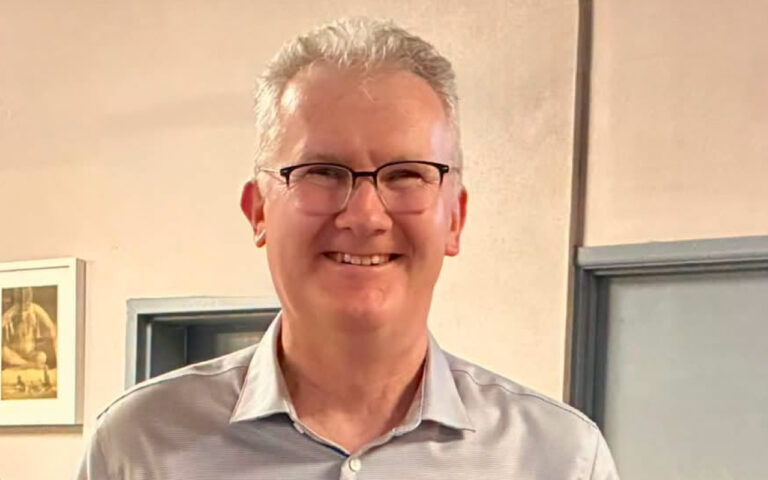
Header image: Tony Burke earlier this month (Facebook).