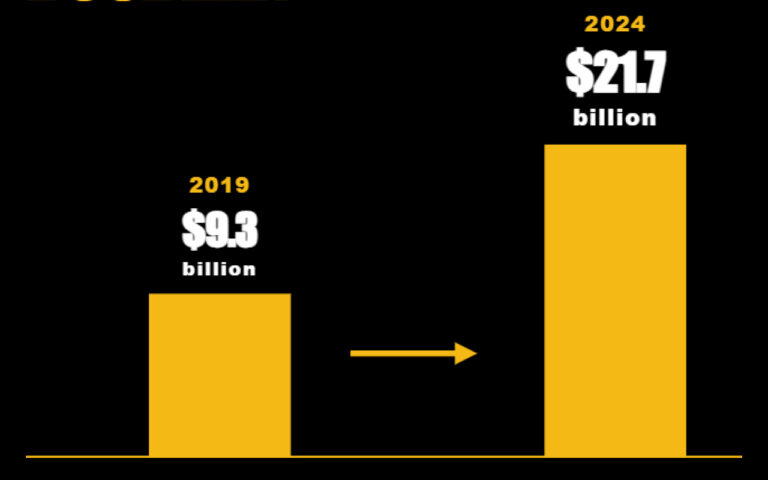
Australia should tax the tens of billions of dollars a year being sent to foreign countries and use the money to help Aussies buy homes and have more children, a right-wing campaign group says.
According to the most recent World Bank data, more than $22 billion was sent out of Australia in 2025, while estimates from Money Transfer Australia for the previous year using World Bank, ABS, KNOMAD, and DFAT figures put total migrant remittances at $38 billion.
Revive Australia released a policy paper this week warning that rapidly increasing remittance outflows had become a “major national economic issue”, and that money being sent out of the country should be taxed at 30%.
Director Brian Marlow said the Australian government needed to follow the Trump administration, which has already imposed a remittance transfer tax, and be prepared to go “much further”.
“Remittances are a form of wealth extraction. Plain and simple,” Mr Marlow said.
“Australia provides the jobs, the wages, the infrastructure, the public services and the stable economy that allow this money to be earned. Billions are then transferred overseas to support foreign households and foreign economies.”
“Australia should retain a share of that wealth.”
Revive Australia proposes using the revenue from a remittance tax to strengthen Australian families, increase the birth rate, help young Australians into home ownership, strengthen essential services and build the infrastructure Australia needs.
A 30% remittance tax could… pic.twitter.com/FM0SJnzMRK
— Revive Australia (@Revive_Aus) August 11, 2026
The policy paper, titled The Great Australian Wealth Extraction, estimated that a 30% levy on outbound personal remittances would raise up to $11.4 billion per year.
“We want to raise billions for Australians and make it more expensive to continually transfer Australian-earned wealth offshore,” Mr Marlow said.
“That money can help Australian families raise children, buy homes, access better health services and build the infrastructure this country needs.
“Tax outbound remittances at 30%. Keep more Australian-earned wealth in Australia. Use the revenue to back an Australian revival.”
The policy paper noted that the World Bank argues that remittance taxes can push transfers into informal channels and reduce payments to foreign households, but stated this was “not a reason for Australia to leave tens of billions of dollars in outbound transfers untaxed”.
Net migrant remittance outflows have more than doubled since 2019, accompanying record-high levels of mass immigration since 2022.
A 2023 survey found that 92% had sent money home in the past 12 months, and 67% said being able to do so was a “key factor in their decision to move to Australia”.
The immigrants surveyed sent an average of 11% of their annual incomes back to their home countries.
Header image credit: Revive Australia.