Stella Huangfu, University of Sydney
The Reserve Bank of Australia has raised the cash rate to 4.6% from 4.35%, taking the key rate to its highest level since late 2011 as it battles persistent inflation.
The fourth rate hike this year will add about A$120 a month to the average mortgage of $730,000. Over the course of the year, the four rate rises have added about $480 a month to the average family’s repayments, dampening spending elsewhere in the economy.
The decision highlights the increasingly difficult trade-off facing the RBA: inflation is still too high, but the economy is already losing momentum and the housing market is weak.
The challenge now is whether the RBA can bring inflation under control without causing a sharper slowdown than intended – or even a recession.
Asked specifically about the risk of recession, RBA Governor Michele Bullock told reporters it was not the bank’s central case “at this point”.
Inflation seems stuck above 3%
The RBA explicitly left the door open to another rate increase, saying:
The board will continue to do what it considers necessary to bring inflation sustainably back to target, including increasing the cash rate target further if needed.
After weeks of warnings on inflation from senior RBA officials, the board’s decision was unanimous.
The RBA said some of the risks of higher inflation it identified in August are now materialising.
The economy was also a little stronger in the June quarter than the RBA had expected. Together with stronger-than-expected inflation outcomes, this contributed to the board’s conclusion that “a further tightening in financial conditions is warranted”.
According to the latest official inflation data, annual inflation was 3.5% in July. Underlying inflation remained at 3.6%, still clearly above the RBA’s 2–3% target range.
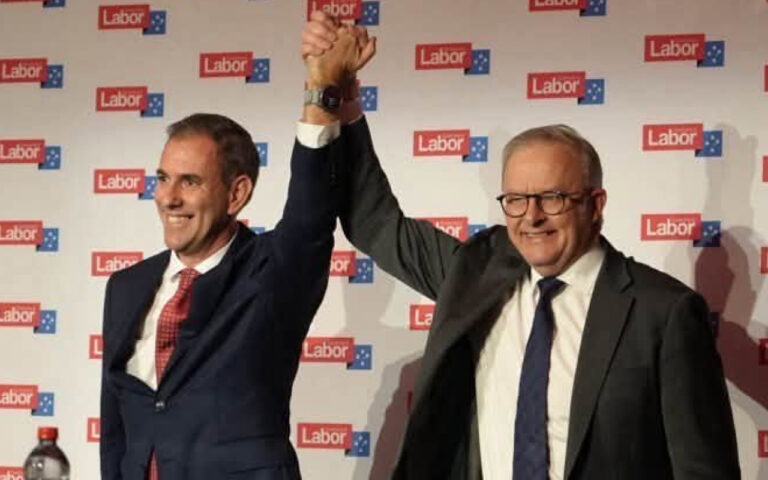
Treasurer Jim Chalmers has pointed to the ongoing fuel price shock from the conflict in the Middle East for higher inflation. He told a press conference:
Our inflation challenge is being turbocharged by a war on the other side of the world.
However, the RBA’s statement makes clear it sees both global and domestic pressures at work. Global energy prices are much higher than it assumed in August. The bank also pointed to AI-related demand pushing up prices for technology goods.
At home, demand is still running ahead of the economy’s ability to supply goods and services, with firms reporting higher costs and either raising prices or considering doing so.
Higher fuel prices are already being passed through to other goods and services.
Interest rate moves cannot lower global oil prices, but the RBA can try to stop these higher costs from spreading further through the economy.
Bullock has become increasingly explicit about this problem, saying unemployment may need to rise further to reduce inflationary pressure.
Higher rates are also making it harder for first homebuyers. New research has shown each hike could lock out some 30,000 potential buyers by reducing their borrowing capacity.
Why the RBA hiked
The problem is not simply that inflation is above target. It has also proved more persistent than expected.
The board said overall demand needs to remain subdued for a period to ease pressure on prices and prevent high inflation becoming embedded.
The longer inflation stays high, the greater the risk it becomes embedded in wages and prices. Workers may seek higher pay to offset living costs, prompting businesses to raise prices further – creating the risk of a wage-price spiral.
However, workers have less bargaining power than in the past, making this less likely.
But interest rates work with a lag, meaning the hikes from February to May are still flowing through the economy.
The danger is that today’s increase could slow the economy too sharply.
The economy is slowing – but not everywhere
The latest figures do not describe an economy that is booming.
The national accounts showed the economy grew by just 0.4% in the June quarter, partly supported by spending on data centres. Unemployment rose to 4.6% in August.
New data on Tuesday showed household spending was flat in August, after rising 1.1% in July.
The housing market is weakening, too. National home values fell 0.9% in August, the fifth consecutive monthly decline, leaving prices 3.6% below the March peak.
And households are worried. The Westpac-Melbourne Institute Consumer Sentiment Index fell 5.2% in September, taking confidence back towards deeply pessimistic levels.
There are, however, pockets of strength. Business investment and debt are still growing strongly. This helps explain why the RBA is not yet convinced the economy has slowed enough to remove inflation pressure. Bullock told reporters:
Domestic spending and investment have been stronger than expected, despite weak sentiment and the softening in housing rates and conditions.
This rate rise will put further pressure on mortgage holders, household spending and businesses.
What happens in November?
Three of the four major banks brought forward earlier forecasts for a November rise to September.
The question now is whether the RBA will need to raise rates again in November.
ANZ is currently the only major bank forecasting another hike, while Commonwealth Bank, Westpac and National Australia Bank expect the RBA to stop after September.
The RBA will receive more inflation data on Wednesday, and more employment and household spending data before its next meeting.
Those figures will help determine whether today’s increase is enough, or whether the RBA decides further tightening is still needed.
With housing, household spending and the labour market already weakening, the risk of the RBA going too far is growing.
Stella Huangfu, Associate Professor, School of Economics, University of Sydney
This article is republished from The Conversation under a Creative Commons licence. Read the original article.
Header image: Treasurer Jim Chalmers and Prime Minister Anthony Albanese at a Labor conference last month (Labor Party).