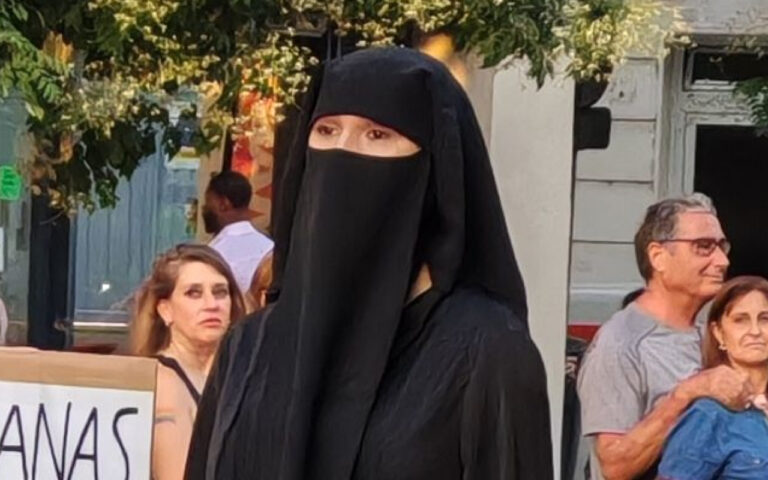
Portugal has brought in a new “burqa law” banning face coverings in public spaces, sparking a meltdown about “Islamophobia” from the far-left.
The legislation, which was proposed by right-wing populist party Chega, was enacted by President Antonio Jose Seguro this week after a right-wing coalition formed and approved it in parliament in July.
Dubbed the “burqa law” by local media, the legislation bans the wearing of clothing designed to prevent identification or conceal the face, and prohibits people from forcing others to cover their face for religious reasons.
Violations are punishable with fines of up to €3,000, and there are exemptions for face coverings worn for medical, professional, artistic or weather-related reasons, and in places of worship, aircraft and diplomatic missions.
“The face must be considered a central element of human identity and communication,” Mr Seguro said.
Leftist parties, including the Portuguese Communist Party (PCP), green-left party Livre, and the Socialist Party (PS), opposed the law and claimed it would fuel islamophobia, Euronews reported.
The PCP claimed the law was “solely about fuelling hate speech and violence against those who are different, fuelling racist and xenophobic discourse”, and had nothing to do with women’s rights or security, while Livre claimed the right was trying to create “a moral panic over a supposed Islamic invasion”.
Denmark announced last month it was extending its ban on Islamic veils to schools and universities, while Muslim face coverings are already illegal or partially banned in France, Belgium, Bulgaria, Switzerland, Austria, the Netherlands, Luxembourg, and Norway.
Restore Britain leader Rupert Lowe responded to the law being enacted by saying the UK should do the same, and pointed out that his previous efforts to ban full-face coverings in public were only supported by one other MP.
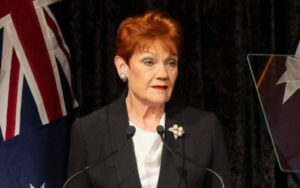
One Nation senator Pauline Hanson has also had repeated attempts to ban the burqa rejected by the major parties, despite polls showing a majority of Australians wanted them outlawed.
Header image: A Muslim woman in a niqab at a protest (Pexels).