A taxpayer-funded online learning program for students who refuse to attend school or have mental health issues such as anxiety, autism, or ADHD has been approved in New South Wales.
The BlendED program, which was launched in Victoria in 2024 as a program at Saints College by Edmund Rice Education Australia and earlier this year expanded to Queensland and Tasmania, was given formal endorsement by NSW Department of Education last week.
The program is a hybrid model of instruction in which online classes are accompanied by weekly in-person checks from a “wellbeing worker”, and BlendED states it is “grounded in a trauma informed practice framework”, ideal for “gender diverse” teenagers, and designed to help “school refusers”.
BlendED NSW will open in Wollongong in 2027, subject to regulatory approval, with enrolments open to young people from across the state. The first intake will be for up to 150 Year 7 to Year 9 students, followed by Year 10 later in 2027, Year 11 in 2028 and Year 12 in 2029.
The program is fully funded by state and federal governments, has no school fees, and provides students with devices, internet access with child-safe monitoring, and access to gatherings and excursions.
Daniel Brown, BlendED’s National Regional Director, said the program was designed for students who struggle at traditional schools due to trauma, bullying, disability, neurodivergence, anxiety, depression or other wellbeing and mental health challenges.
“Our commitment is to provide inclusive and accessible education opportunities for young people who have become disenfranchised from mainstream education,” he said.
“Across Australia we are seeing a growing number of young people who want to learn but are facing significant barriers to attending school each day. BlendED is designed to meet them where they are and reconnect them with education.”
BlendED National Chief Executive Officer Chloe Hand said the program created a “pathway for young people to re-engage with learning while also supporting their health, confidence and connection to community”.
“For every young person who walks through the door believing school wasn’t built for them, BlendED exists to prove otherwise. Here, they’re given the chance to rebuild confidence, reconnect with learning and truly belong,” she said.
BlendED’s Victorian program provides students with a free Myki public-transport card, and access to a laptop and inclusive internet. The program also states that there are “no school fees, no booklists, [and] no uniform”.
Saints College stated last year that BlendED offered “no punishments, ever”, with the college website adding that that the school is “on your side” and that students are “respected, loved and listened to no matter what”.
BlendED’s online classes run from 9.30 to 2.30 to comprise a total of 20 hours of tuition a week. Alongside the online classes the syllabus includes activities such as group sessions and individual teacher-time, with students encouraged to stick to the timetable to the extent they can. The school added that if students are unable to follow the prescribed schedule, “that’s okay too”.
The development of programs such as BlendED is part of a wider crisis in absenteeism in Australian schools, with a recent study from the Australian Curriculum Assessment and Reporting Authority finding that over 40% of students in Years 1 to 10 were missing at least one out of 10 school days”.
This has significantly worsened over the last few years, with the percentage of students attending over 90% of school days falling from 73% in 2019 to 59% last year.
This decrease has given rise to terms such as “school phobia” or “school can’t”, with an estimated 150,000 Australian teenagers who feel they are unable to attend.
Data released in May showed 27.2% of Australian students are receiving an adjustment for disability at school, up from 25.7% in 2024 and 18% in 2015, and there has also been a rise in ADHD and autism, especially among adolescents.
There was 41% increase in autism diagnoses between 2018 and 2022, especially among younger age groups, according to the Australian Bureau of Statistics, while data from the Australian Psychological Society showed an almost 300% increase in ADHD prescriptions in the decade to 2022.
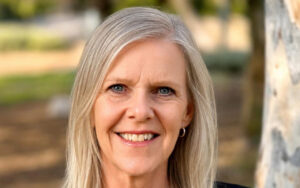
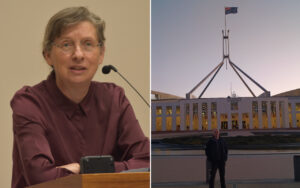
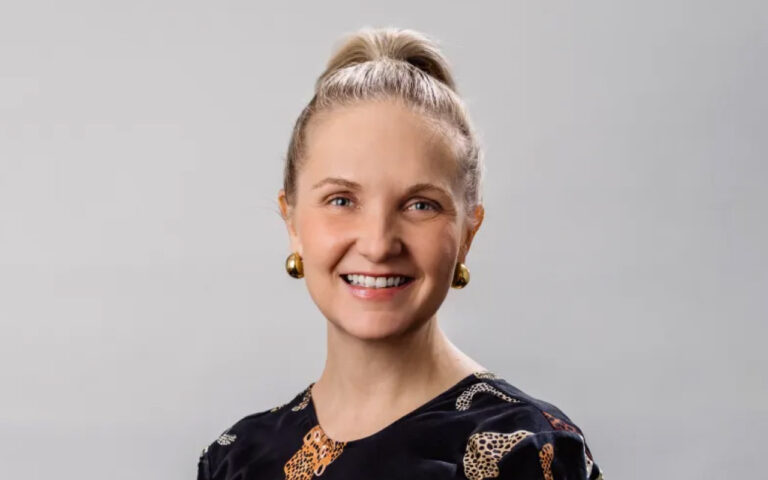
Header image: Director of BlendED schools Chloe Hand (BlendED).