Foreigners would be permanently banned from buying Australian homes and farmland under a new 10-point migration plan proposed by a right-wing campaign group.
Overseas buyers, including temporary residents and foreign-owned companies, are already barred from purchasing existing dwellings, but there are exceptions for investments that increase housing supply, permanent residents and spouses of citizens are not included, and the ban ends on June 30, 2029.
Under Revive Australia‘s plan, which was unveiled last week, the ban will be made permanent and extended to new dwellings, vacant residential land and agricultural land.
“Purchases made jointly with an Australian citizen spouse are exempt, as is farmland already owned jointly with such a spouse,” Revive’s policy paper states.
“Other foreign-owned farmland bought before the ban must be sold within three years, while homes already owned by foreign persons, including permanent residents, will be unaffected.”
In April One Nation leader Pauline Hanson called for a total ban on non-citizens buying Australian homes, following revelations 50,000 permanent residents have been allowed to take advantage of Labor’s 5% deposit first home buyers scheme, which advertises in foreign languages including Arabic and Chinese.
Revive’s nine other reforms include limiting migration to four pathways – genuine international students, highly skilled workers, spouses of Australian citizens and restricted working holiday makers – and imposing a 30% tax on remittances, which Revive previously said could add $10 billion per year to the economy.
The campaign group also wants to remove international student work rights, bring in a 10% enrolment cap at universities, and require employers to pay a levy of 10% to 30% of foreign worker salaries, with the revenue used to train Australians.
Marriage to an Australian citizen would be the only pathway to permanent residency, parent visas would end, guest worker schemes such as those that bring in unskilled Pacific Islander farm labourers would close, and second and third working holiday visas would also be scrapped.
There would be a increased reporting requirements for working visa sponsors, who would also be fined for overstays, all illegal immigrants would be deported, and any non-citizen sentenced to prison would lose their visa.
Government benefits, including Medicare, education, public housing and unemployment payments, would begin on citizenship, which would require 10 years of permanent residency.
Revive Australia founder Brian Marlow said the migration plan would help reverse the economic damage caused by record-high immigration levels over the past decade.
“Australians have been told for years that mass migration is good for the economy,” he said,
“It might have made the economy bigger, but it has not made Australians better off. Rents keep climbing, the cost of living is out of control, and Australians were never asked whether they wanted their country transformed this quickly.
“The goal is not radical. It is what most Australians once took for granted: a decent wage, a home they own and the means to raise a family.”
According to Foreign Investment Review Board figures released by Treasury late last month, foreign investors spent $4.7 billion on Australian housing in 2025-26 despite the ban, with Chinese buyers topping the list.
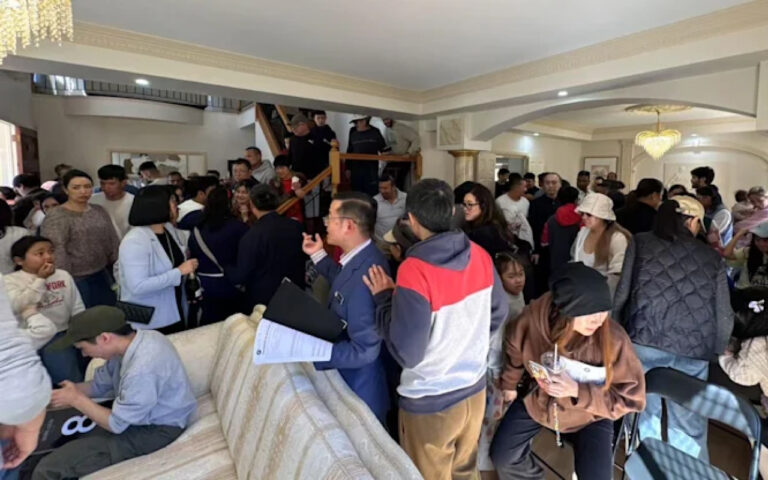
Header image: A packed auction in Sunnybank Hills, Queensland, last year that was eventually won by an Afghan family (Place Sunnybank).