An online learning program for students who refuse to attend school or have mental health issues such as anxiety, autism, or ADHD is launching in Queensland after being approved by the state government.
The BlendED program, which is designed to re-engage young people who can’t attend mainstream schools due to “severe anxiety, bullying, neurodivergent diagnosis or burnout”, will begin in July after formal endorsement from the Education Department and Non-State Schools Accreditation Board approval.
BlendED Queensland will initially be available for Years 7 to 9 from July from hubs in Brisbane and Cairns, with up to 150 students expected to enrol in its first intake and more than 70 already pre-enrolled.
The program is a hybrid model of instruction in which online classes are accompanied by weekly in-person checks from a “wellbeing worker”, and BlendED states it is “grounded in a trauma informed practice framework”, ideal for “gender diverse” teenagers, and designed to help “school refusers”.
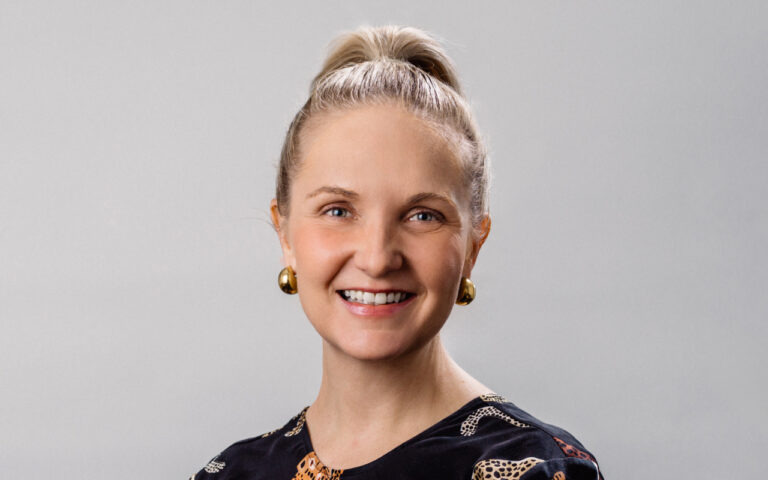
BlendED Chief Executive Officer Chloe Hand said the program was specifically designed for young people who struggled in “traditional schooling environments” due to anxiety, depression, bullying and other challenges.
“Our commitment is to provide inclusive and accessible education opportunities for young people who have become disenfranchised from mainstream education,” Ms Hand said.
“Across Australia we are seeing a growing number of young people who want to learn but are facing significant barriers to attending school each day. BlendED is designed to meet them where they are and reconnect them with education.”
“By combining high-quality teacher-led online learning with regular face-to-face gatherings and strong wellbeing support, we are creating a pathway for young people to re-engage with learning while also supporting their health, confidence and connection to community.”
Brisbane Catholic Archbishop Shane Mackinlay and Cairns Catholic Bishop Joe Caddy also welcomed the initiative, and described it as an important response to the “changing needs of young people”.
“BlendED reflects the Church’s commitment to ensuring that no young person is left behind. It offers a compassionate and innovative model of education that reconnects vulnerable students with learning, community and hope for their future,” Mr Mackinlay said.
“The Diocese of Cairns is keenly aware of the complex educational and pastoral needs of some young people in our region, particularly those for whom traditional schooling structures have not always been able to provide an effective or sustaining response,” Mr Caddy said.
“In this light, I welcome the intention of EREA BlendED National in Queensland to offer flexible, inclusive and innovative pathways that remain faithful to the mission of Catholic education and attentive to the dignity of every young person.”
BlendED was launched in Victoria in 2023 by Saints College, part of Edmund Rice Education Australia (EREA), and last year announced it was expanding to other states thanks to backing from federal and state governments, following hundreds of enrolments.
The program is also enrolling in Tasmania this year, with South Australia and New South Wales expansions planned.
BlendED’s Victorian program provides students with a free Myki public-transport card, and access to a laptop and inclusive internet. The program also states that there are “no school fees, no booklists, [and] no uniform”.
Saints College further stipulates that BlendED offers “no punishments, ever”, with the college website adding that that the school is “on your side” and that students are “respected, loved and listened to no matter what”.
BlendED’s online classes run from 9.30 to 2.30 to comprise a total of 20 hours of tuition a week. Alongside the online classes the syllabus includes activities such as group sessions and individual teacher-time, with students encouraged to stick to the timetable to the extent they can. The school adds, however, that if students are unable to follow the prescribed schedule, “that’s ok too”.
The development of programs such as BlendED is part of a wider crisis in absenteeism in Australian schools. A recent study from the Australian Curriculum Assessment and Reporting Authority reported that over “40% of students in years 1 to 10 were missing at least one out of 10 school days”.
This has significantly worsened over the last few years, with the percentage of students attending over 90% of school days falling from 73% in 2019 to 59% last year.
This decrease has given rise to terms such as “school phobia” or “school can’t”, with an estimated 150,000 Australian teenagers who feel they are unable to attend.
This increase in absenteeism occurs alongside a rise in ADHD and autism in Australia, especially among adolescents.
Analysis from the Australian Bureau of Statistics shows a 41% increase in autism diagnoses between 2018 and 2022, especially among younger age groups, while data from the Australian Psychological Society shows an almost 300% increase in Australians given ADHD medication in the decade to 2022.
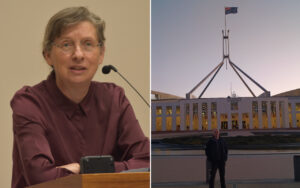
Header image: Director of BlendED schools Chloe Hand (BlendED).