Jewish, Muslim and Hindu groups are demanding the Australian government “significantly strengthen” its controversial Digital Duty of Care legislation by adding “hate speech” protections, and allowing citizens to sue US tech companies.
The country’s most powerful Jewish lobby group, the Executive Council of Australian Jewry (ECAJ), has joined forces with the Islamic Council of Victoria and the Hindu Council of Australia, to support a call by the far-left Australia Institute for the proposed online censorship laws to be made even stricter.
Taxpayer-funded feminist activist group Teach Us Consent is also among the more than 80 organisations that have signed an open letter from The Australia Institute to Communications Minister Anika Wells, as are various unions, and multicultural and refugee groups.
The co-CEO of Australia’s most powerful Jewish lobby group says the government’s controversial Digital Duty of Care online censorship bill is not strict enough.
He wants it to cover “the promotion of anti-Semitism, misogyny, and homophobia”, even if there is no crime committed. https://t.co/vkwk2WZkbP
— N News (@NoticerNews) November 10, 2026
The co-signers said the legislation should be strengthened to add “protections against hate speech including racist and homophobic hate speech”, “private right of action for those harmed by breaches of the duty of care to seek compensation and other remedies”, and “substantial penalties for social media companies that break the law”.
The Digital Duty of Care bill, which will give the government unprecedented new powers to censor the internet, has sparked concerns about political censorship, and Prime Minister Anthony Albanese’s push to pass it by the end of the year is being opposed by One Nation and the Coalition.
ECAJ co-chief executive Peter Wertheim, who helped draft “hate speech” and prohibited hate group laws passed by both major parties after the Bondi Islamic terrorist attack, told the Senate on Tuesday the laws should cover “the promotion of anti-Semitism, misogyny, homophobia etc.” even if no crimes were committed.
When Liberal senator Sarah Henderson raised concerns the bill could used to “suppress free speech and lawful discussion”, Mr Wertheim said that he was against “abuse of any legislation”.
“I would rather see that power in the hands of a democratically elected and accountable government than in the hands of unaccountable tech companies, as it is at the moment,” he said.
“What I would really like to see if for the people who are most directly affected by these harms having the right to take legal action to defend themselves from these harms,” he said.
Labor requires support from the Greens to pass the bill, and the far-left party also wants the legislation strengthened, backing The Australia Institute’s calls for the right to private legal action and larger fines for social media giants.
I was curious what role government funding plays among the organisations weighing in on the Digital Duty of Care Bill, so Grok bot and I did a little surveying (illustrative rather than exhaustive).
Today was day 1 of the Senate hearings.
Of the 25 organisations that appeared, 13 receive/d recent government funding, 4 are tech platforms, 7 don’t receive government funding, and 1 I couldn’t confirm. 2 individuals appeared in a private capacity.
7 organisations opposed the bill, 4 in their submissions and 3 at the hearing. None of them currently receive government funding. Funny that!
Not one of the 13 funded organisations opposed it. 12 support it, most with amendments, and 1 is neutral.
Several rely heavily on government money: ACCAN gets 98% of its revenue from government, Our Watch 87% and Teach Us Consent 87%. Teach Us Consent has also received two federal grants worth $7.56m. Lucky ducks.
Digital Rights Watch, a BIG supporter, reported no government revenue last year, but it received $301,500 from Minderoo, a major backer of the bill. It hasn’t declared this year’s funding yet.
Among the tech platforms, Google holds current government contracts and supports the bill. TikTok opposes it as drafted.
The government can buy consensus with our taxpayer dollars.
— 𝓕𝓸𝓲𝓭 (@policypussy_) November 9, 2026
Lawyer Josh Bernstein, the Director of Corporate Regulation at The Australia Institute, said giving citizens the right to sue tech giants was supported by the eSafety Commissioner.
“The Albanese Government should be commended for including gendered violence as a serious online harm in the bill. But it needs to address other forms of hate speech including racist and homophobic hate speech,” he said.
“As the Royal Commission into anti-Semitism made clear, the most extreme forms of hate speech are propagate by social media giants because they profit from doing so. That has got to stop.
“We have been overwhelmed by the support right across the community for ensuring that this important step regulation of Big Tech companies is effective.”
The US government has raised “serious concerns” about the Digital Duty of Care regime, warning it will facilitate censorship, encroach on free speech, and unfairly burden American companies.
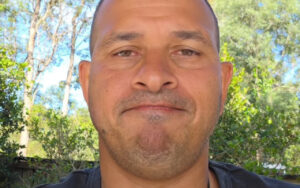
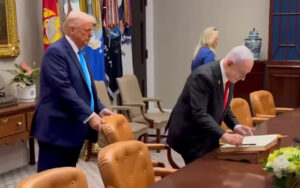
Header image: Left, Mr Wertheim and Mr Albanese. Right, Mr Albanese at a Hindu Council of Australia event (Facebook).