Running a single marathon is a great achievement. Running 30 marathons is a spectacular feat. Running 30 marathons in 35 days is something only a world-class athlete could achieve. But running 30 marathons in 35 days, and running the final nine of those marathons with a broken leg – that’s an impossible feat that would require superhuman powers. But that is exactly what Jason Arday has claimed to achieve. But that’s not all, Jason Arday’s incredible feats aren’t just limited to running nearly 240 miles on a fractured leg without medical intervention, he also claimed to have run 600 miles in six days on a treadmill (without any evidence), played both football and snooker at a professional level (a boast that was apparently taken out of context), raised over £5.5 million for charity (but can’t name a single donor), managed to go 15 years with a barely a wink of sleep, and even appeared on the famous television documentary series Seven Up! – which originally premiered a whole 21 years before he was even born. This is the story of Cambridge University’s youngest-ever black professor, who was appointed as Professor of the Sociology of Education in 2023.
Jason Arday was born in 1985 on a council estate in Clapham, South London, to Ghanaian parents – a humble beginning for a man who would go on to achieve so much. But Jason would not only achieve great feats, but he would do so against all the odds, overcoming what some may have called ‘impossible barriers’ during his meteoric rise to greatness. At just three years of age, Jason was diagnosed with global developmental delay and autism spectrum disorder, leading medical experts and therapists to predict that he would require assisted living for the rest of his life. But this wasn’t the end of young Jason’s struggles – he was completely non-verbal throughout his early childhood and communicated entirely using sign language and as a result he didn’t learn to speak until he was 11 years-old. He credited his mother for helping him break through his silence by using music, rhythm, and song lyrics to connect him to language – the power of love and song set him on the road to such success. However, due to his late language and speech development, he did not learn to read or write until he was 18 years-old. Allegedly.
And the word ‘allegedly’ should precede many of Jason’s achievements and boastful tales. It is a well-known medical and biological fact that learning to speak a language fluently after the age of 11 – if a person has been completely non-verbal since birth – is incredibly difficult due to a biological phenomenon known as the critical period hypothesis. Whilst it is not always absolutely impossible, it is one of the steepest challenges in cognitive science. This is because children’s brains form billions of neural connections specifically designed to map sounds to meaning, however, around the point when a child passes through puberty (roughly at the age of 11 to 13), the brain undergoes what is known as “synaptic pruning”. Neural connections that were not used – such as the neural pathways for processing and producing spoken speech – are cleared away or repurposed. Once this pruning happens, the brain loses the elasticity required to naturally absorb language structure.
But it’s not all just about neural pathways, when someone speaks, their brain must also simultaneously coordinate the lungs, vocal cords, tongue, teeth, and lips. This motor mapping is trained continuously through babbling and talking during infancy and childhood. A person who has been non-verbal for 11 years has not built these specific motor pathways, making the physical act of clear speech production highly uncoordinated and laborious. But miraculously, Jason beat all the odds, and at the last possible moment he learnt to speak. But the miracles just kept on coming and Jason managed to attend local schools in South London and eventually left secondary education with two GCSEs – one in Physical Education and one in Textiles. But despite the mountainous struggles that would have beaten most men, Jason was determined to go further still – and eventually, not even the boundaries of time itself would hold him back.
Determined to pursue sports and teaching, Jason then went to a local college to study for a BTEC diploma, which allowed him to bridge the gap into higher education. This was another major milestone for the young achiever – and this herculean feat was made even greater as Jason claimed that due to his late language development, he did not learn to read or write until he was 18 years-old. Some may scoff at Jason’s two GCSEs and BTEC diploma, but to have achieved these grades whilst not even being able to read and write proved that he was nothing short of a child prodigy. Jason then went on into higher education, and graduated from St Mary’s University in Twickenham in 2008 with a BA in Education Studies and Physical Education before serving as the university’s Student Union Athletics President for a year immediately following his graduation. For many, this would be the end of a long and arduous academic road, but to Jason, it was just the beginning.
Jason then went on to earn an MA in Education and Pedagogy from St Mary’s and later completed a PGCE at the Institute of Education to become a qualified school PE teacher. At this point, after achieving so much, and overcoming so many almost insurmountable hurdles, he could have entered a well-paid role in teaching. But Jason was still hungry for more, leading to his transitioning into the subject of Sociology of Education and going on to earn a Master of Education (MEd) followed by a PhD in Education from Liverpool John Moores University in 2015. This would have been incredible enough, but due to Jason’s humble background, he had no financial backing, and whilst passing through educational institutions at breakneck speed he was forced to work part-time retail shifts to fund his higher education tuition. Not only did Jason beat all the odds as a late starter, but he was both an academic genius and a hard worker.
But looking at Jason’s impressive academic résumé, it appears that mathematical qualifications are sadly absent, and that may be why things just don’t seem to add up. We are meant to believe that a boy who was completely non-verbal due to autism and global developmental delay until age 11 and who was unable to read or write until 18, then went on to earn a PhD by the age of 29. This means that in just 11 years Jason managed to learn basic literacy and catch up on all those years of missed schooling, complete an undergraduate degree (which typically takes 3 years), complete two separate Master’s degrees (typically taking 1-2 years each), complete a PGCE teacher training qualification (taking 1 year) and then write a 100,000-word PhD dissertation (taking typically 3-4 years). In just over a decade, Jason had not only learnt to read and write, but condensed 12 years of higher education into a near record-breaking period of time that would prove his hyper-accelerated cognitive processing abilities were second to none. And he did it all whilst working multiple jobs and without sleeping.
Jason’s story was remarkable – some may even go as far as to state that it was unbelievable – but it wouldn’t be long before educational institutions up and down the country would begin falling over themselves to offer him prestigious well-paid positions. Once he had completed his PhD, Jason secured his first major permanent academic post at the University of Roehampton, entering the institution directly as a Senior Lecturer in Physical Education, and it must be noted, this rapid entry without years of junior postdoctoral research was highly unusual, but surely by this point, extraordinary achievements were nothing more than everyday occurrences for Jason. Jason then went on to join Durham University’s Department of Sociology before being rapidly promoted into an executive role. Within just a year, Durham University had promoted Jason to Associate Professor. Alongside this, he was named the Deputy Executive Dean for People and Culture within the Faculty of Social Sciences and Health. Interestingly, and rather tellingly, this executive role placed him in charge of institutional diversity and inclusion initiatives.
But the meteoric rise of the non-verbal black youth from inner city London wasn’t over yet. In 2021 Jason stepped into a new role at the University of Glasgow, joining their School of Education to take the position of Chair in the subject of Sociology of Education – another milestone had been achieved, as he was now a full professor. And at the tender age of 35, this appointment officially made him one of the youngest full professors in the whole of the United Kingdom. It was at this point Jason’s numerous lofty achievements and incredible superhuman feats caught the attention of officials at Cambridge University – one of the most prestigious and influential institutions of higher education in human history had now noticed him and they wanted him on their team. And in March 2023, at just 37 years-old, Jason was appointed to the prestigious Professorial Chair of Sociology of Education at Cambridge’s Faculty of Education and was then concurrently elected as a Fellow of Jesus College. This appointment broke the record for the youngest Black professor in the university’s history. Jason was now at the very pinnacle of academic excellence; his fairytale story was now complete.
This is the point where the tale should come to an end, where things should be wrapped up nicely with a big red bow and where Jason receives the applause and recognition he deserves. And that would be how the story ends, if any of his achievements could actually be verified. But at this juncture some uncharitable folk might claim that Jason was just making it all up, and that the only reason anyone believed him is because lecturers and those with institutional power wanted to promote him in order to prove a very specific and racially charged point. It has been noted that people working within modern higher education, and specifically in institutions like Cambridge, Durham, and Glasgow are highly motivated to promote ‘diverse’ talent, especially if that ‘talent’ has a powerful, motivational and inspirational narrative attached. Jason was everything that liberal multiculturalists could have dreamed of, so much so, that university officials all over the UK were so eager to celebrate the story of a non-verbal black man that had beaten all the odds, that they skipped any of the standard, rigorous vetting of his academic work that one might usually expect.
That is exactly how Jason ended up in his position at Cambridge, not so much because of Jason’s myriad of self-professed achievements, but because the institution never checked any of his claims. And this isn’t mere conjecture: the University of Cambridge has now admitted that officials did not conduct an independent textual analysis when hiring Professor Jason Arday in 2023, instead, their vetting process relied heavily on ‘institutional trust’ and ‘reputation’ rather than any raw forensic auditing. In short, because Jason had already been vetted, hired, and promoted to senior positions by three other highly respected institutions (Roehampton, Durham, and Glasgow), Cambridge’s hiring panel assumed his foundational work was immaculate. Instead, Cambridge University’s appointment panel was deeply captivated by Jason’s unique, highly inspirational backstory and the focus of the hiring process was centred on his vision for the sociology department and his high-profile advocacy work surrounding diversity and inclusion, rather than a line-by-line verification of his past work. After all, who needs to know if a candidate can actually do the job they are being hired for when they fit the diversity profile so perfectly?
But unfortunately for Jason and his eager backers – Cambridge University, a number of other respected academic institutions and several publishers – this isn’t where the story ends, and Jason doesn’t get to leave the stage to rapturous applause. Earlier this year, allegations would emerge that suggested that Jason’s unbelievable backstory and his near impossible achievements weren’t quite as real as some claimed. An analysis of Jason’s 2015 PhD thesis, which was awarded by Liverpool John Moores University, revealed something truly shocking: the document contained 188 sentences that were identical or nearly identical to a thesis written by a student at Brunel University in 2009. But these issues weren’t just limited to Jason’s PhD, textual overlaps were then identified in several of Jason’s subsequent journal articles, leading to two separate journals issuing formal correction notes. In some papers, Jason allegedly recycled borrowed text and framed the lines as “direct quotes” from research subjects he claimed to have interviewed himself. Worse still, The Times later uncovered severe flaws in his references, including data discrepancies and the complete omission of a research participant who Jason previously claimed had taken their own life.
This would have been enough to sink any other high-profile academic. However, Jason’s run of incredible feats and unbelievable luck only continued. Cambridge University were so enamoured with Jason that when this new information came to light and accusations of plagiarism emerged, the university’s immediate institutional response was not to question Jason, but instead to defend him. Senior figures from Cambridge University completely dismissed the allegations, framing any criticism of their all-star black professor as a “vile campaign of bullying” directed at a vulnerable, dyslexic and autistic scholar. But as more and more allegations surfaced, Cambridge University officials changed their tactics, and attempted to distance themselves and the institution from the core issue by stating that investigating a PhD thesis is strictly the legal responsibility of the institution that awarded it – they were passing the responsibility back to Liverpool John Moores University.
And the response of those who should have checked his work in the first place was just as telling. Colleagues and peer-reviewers admitted to being hesitant to question Jason’s data or writing style out of fear of looking like they were attacking a vulnerable, autistic scholar – in short, no one wanted to question the black academic prodigy, they just wanted to put him on a pedestal to prove a point. But now, and rather ironically, all eyes were on Jason Arday – but not quite in the way that he wanted, as people were now increasingly focusing on the details of his work rather than his tall tales. As a result, independent researchers began feeding Jason’s published work into advanced anti-plagiarism software and the truth was plain for all to see. Several major academic publishers were forced to confront the reality that their peer-review processes had overlooked glaring and obvious anomalies. But the embarrassment wasn’t yet over, as Jason had published several highly regarded books with a company called Routledge, a leader in academic publishing. When complaints were first made regarding text-recycling and uncredited overlap in these texts, Routledge initially stood by their man. However, as the sheer volume of identical sentences became public, the publisher was humiliatingly forced to initiate a series of formal internal reviews.
Everything was coming crashing down – and there was only one thing Jason could do. And if you thought that would be to admit to his alleged wrong doings, apologise and walk things back, you would be entirely incorrect. It was in fact time to double down, and invent another story to make everyone feel sorry for him in the hope that the whole incident would just go away and people would stop talking about his alleged plagiarism. And this is where Jason would reveal a final, previously hidden chapter to his remarkable story, it was time for him to tell the world that he had of course been the victim of racism. When Jason had first joined Cambridge University as a professor, he had been the victim of a hate campaign and all this talk of plagiarism and falsified superhuman feats of endurance risked stirring up another maelstrom of bigotry. But it wasn’t enough to claim that he had merely been the victim of hate, Jason had to go further: claiming that a severed pig’s head had been sent to him as part of a sudden escalation of abuse and threats that were specifically aimed at him due to his high-profile appointment as the university’s youngest black professor.
This incredible claim would surely silence all of his critics, as once the police reports and photos of this obscene crime were made public, no one would dare to question the black genius and his remarkable stories. There was only one small problem: Jason did not report the delivery of the pig’s head to the police when it allegedly took place. He claimed that he intercepted a large cardboard box at his parents’ house in South London, on opening the box, he discovered the pig’s head and did what anyone else would do – threw it straight into a wheelie bin and waited several months before calling the police. Well, at least he reported it to the police in the end, so a crime number would back up his harrowing tale. What’s more, Jason was so sure of his interaction with the police, that he went on to claim to reporters that when the police finally investigated the hateful act, they managed to trace the animal back to a local butcher who sold a “whole hog” on the morning that the severed head was delivered to his parents’ house.
However, unfortunately for Jason, the Metropolitan Police keep records of crimes that are reported, and they revealed that after an extensive search, there was no evidence whatsoever of any such report or subsequent investigation. This surely must have been the result of institutional racism within the Met Police and officers must have destroyed all evidence of the report. But at least Jason could still rely on the butcher to confirm the details of this gruesome hate crime. Yet in a final bizarre twist, reporters from The Guardian (who were no doubt driven by a desperate attempt to prove Jason’s story to be true) visited the specific South London butcher that Jason himself had named as the providers of the hog. However, the staff at the shop stated that no police officers had ever come in to question them about a pig’s head, dryly noting, “That’s the kind of thing we’d remember.” Indeed, who could forget such a thing?
One would expect that opening a large parcel only to discover a severed pig’s head nestled within would be rather unforgettable – but in the case of Jason, this may have been just another one of many rather extraordinary occurrences. But as we live in a technological wonderland where everyone has a telephone in their back pocket featuring a high-resolution camera, this kind of extraordinary occurrence would surely result in a photograph being taken. However strangely, Jason did not even take a single picture of the offending item before hurling it into a wheelie bin and according to the police – never even reporting the incident. Strange behaviour for a man of such incredible academic stature, after all, a man who had mastered time travel could surely operate a simple device like a smartphone. It seems that just as with Jason’s academic work, accurate citations were sadly lacking. But the embarrassment was not over yet, as Jason’s friends and colleagues at Cambridge, who were interviewed by the press, all claim he never even mentioned the incident to them. It’s almost as if it never even happened.
Backed into a corner, Jason was faced with only one final option: it was time to go nuclear; it was time for him to scream the word ‘racism’ as loudly as he could and then wait for the cavalry. This is exactly what he did, and he got exactly the result he had hoped for, as more than 12,000 people – including Green Party leader Zack Polanski, at least five Labour MPs and a gaggle of Cambridge academics all signed a petition set up by the Good Law Project supporting him. What’s more, fellow black academics were up in arms about his treatment, with Kehinde Andrews, professor of Black Studies at Birmingham City University, bellowing profusely that Jason was a good boy and he didn’t do anything wrong. In fact, according to Kehinde, poor Jason was merely the victim of a “smear campaign” that was “as predictable as it is baseless”. But it wasn’t just black academics who were angered, white professors also fell over themselves to come to Jason’s defence, with Alan Lester, a University of Sussex Geography professor who specialises in colonialism, calling the entire saga a “non-story”. But the best was yet to come.
Jewish cognitive neuroscientist, Fellow of Trinity College and director of Cambridge University’s Autism Research Centre – Sir Simon Baron-Cohen – raised important concerns about the impact that the media coverage was having on Jason and his mental health. As Jason had been through so much, and achieved so many great feats, Simon Baron-Cohen wanted everyone to just shut up and stop talking about the issue, stating: “We should of course always investigate plagiarism to protect academic standards; however, I cannot stand by and watch when an autistic man is on the ground and the kicking continues. This is relentless bullying of a vulnerable autistic man and raises safe-guarding issues. It’s time to stop.” According to Baron-Cohen, this wasn’t about truth, academic integrity or standards in higher education, this was now a ‘safeguarding issue’ and what’s more, it was ‘bullying’.
If Jason Arday had been white, it would have undoubtedly been the case that he would have either resigned, or been forced out of his lucrative position. However, at the time of writing, Cambridge University’s leadership is actively shielding him from any scrutiny, citing a prior institutional clearance. An academic misconduct panel at Liverpool John Moores University – which awarded Jason his PhD – reviewed the 188 copied sentences in March 2026 and cleared him of intentional misconduct, ruling the overlaps were an “honest and reasonable error” caused by a depleted student supervision team. They too wanted the world to know: Jason was indeed a good boy who didn’t do anything wrong and that the copied sentences weren’t his fault. Cambridge have now officially declared Jason the victim of a “vile campaign to undermine his credibility” driven by right-wing media outlets and their Faculty of Education is actively providing him with safety infrastructure, including panic alarms and specialist staff to security-screen his mail – who are no doubt on high-alert for severed animal heads. What’s more, despite everything that has happened, the commercial book publishers he has deals with have also confirmed they are still proceeding with his upcoming titles as planned.
But even now, with all these facts, assertions and allegations out in the wild, the public isn’t left with many answers – only more questions. Was Jason Arday really non-verbal until 11 years of age? Did he miraculously learn to speak at the very last minute with the help of music? Could he really not read and write until the age of 18? If he could not read and write until 18, how on earth did he get two GCSEs and a BTEC diploma? Some of what we have been told is undoubtedly true – he did indeed go to several major universities – but that raises even more questions. How could anyone even apply to a university if they were still learning to read and write? And why would a university accept a student who couldn’t read or write properly? And if he did learn to read and write at the age of 18, how did he compress such a large amount of learning into a single year of work? So many questions, and these questions are all about events and achievements that allegedly took place before Jason even got to university and before he allegedly began copying the work of others.
But then there are a string of pressing questions about his time in higher education. Why didn’t those checking his work go over it properly? How did Jason manage to get his work through the peer review process, and who were the peers who reviewed it? What work did he present when attending interviews for lucrative and prestigious positions, and how do institutions decide whether a candidate is suitable for the role? There are people out there who can answer these questions, but they never will. In fact, the only way any of this could be verified is if we had a time machine, and there’s only one person in this whole sorry tale who claims to have broken the laws of physics and travelled back through time – and conveniently, that is of course Jason. Which all leads to only one conclusion: a young black man who was woefully underqualified ended up being ushered through educational institutions and was given a pass at every level in order to unfairly elevate him in a blatant attempt to prove a political point. Jason Arday is the ultimate token black academic, and universities built him up because of that.
And that’s really the point; this isn’t just a story about a silly man with a big mouth and an overactive imagination. This story is really about the fact that one particular silly man with a big mouth and an overactive imagination ended up as a Cambridge University Professor with a number of academic book deals. And the reason he ended up in that position is simple: it wasn’t because of his incredible achievements; it was because of his ethnic background and the sob story he sold to a panel who were no doubt overwhelmingly made up of white liberals. One of the supposed strengths of the academic system is that it is meant to have rigorous checks in place to ensure those who are underqualified do not get into positions of power or authority, and these checks and balances are not only there to ensure fairness and to guarantee that only the best of the best take the top positions in leading universities, but also to ensure that at the heart of academia is a system of structured meritocracy. This meritocracy is not only to ensure the cream rises to the top, but to create a constant upward cycle that leads to ever-increasing standards and that academic boundaries are constantly tested and pushed. But this all goes out the window if a candidate is from an ethnic minority background.
The fact that Jason Arday rose to such a position is a damning indictment of the current state of academic institutions in Britain. But this story also illustrates another important issue – this wasn’t a one-off failing involving a single university and a small number of officials, but a national systemic failing involving dozens of people at multiple top-tier universities and publishing houses. It is clear, these institutions have given up on the ideals of meritocracy and excellence, and have instead elevated diversity, equity and inclusion as the most important virtues in modern education. This is not only unfair to better and more qualified candidates who have genuinely worked harder and deserve the job in question, but it also inevitably leads to a decline in the overall quality of an institution. But the damage done is not just limited to the institution in question, but is part of a wider process of societal and civilisational decline. What’s more, it is a sign that elite institutions are no longer dominated by scholars who strive for knowledge and truth, but instead are controlled by those who have an almost religious belief in multiculturalism and diversity.
This religious belief is so great, that when a man like Jason Arday walks into an institution he isn’t just seen as a poster boy, but almost as a form of messiah who can do no wrong and should face no criticism. As such, those who are so eager to place him on a pedestal will not even question the incredible feats he boasts of – no matter how outlandish they are. Instead, officials within elite institutions will parrot the wild boasts of men like Jason Arday, happily spreading the word of the great miracles performed by their latest diversity hire. Officials at Cambridge University seem so in love with the idea of Jason that they appear to be one step away from claiming that after he ran his 35 marathons (9 of which were achieved on a broken leg) he then proceeded to walk on water and feed the entire university with one mackerel and a single loaf of sugar bread. Such is the unquestioning and almost religious belief in Jason Arday, that even now, the university stands by him and he will remain as one of the best paid and most highly revered published academics in Britain.*
To Britain’s elite educational institutions, Jason Arday’s improbable tales of being non-verbal at 11, running marathons on a broken leg and appearing on a television show that premiered 21 years before he was born weren’t red flags – they were integral reasons as to why they embraced him and put him on a pedestal. And that leads to one final point that must be made clear – an uncomfortable issue that many won’t wish to accept. The case of Jason Arday is absolute proof that the ‘woke’ agenda and shibboleths of ‘diversity, equity and inclusion’ are certainly not a thing of the past – in fact they are very much alive and well. The idea spread by some within the media and in online circles that ‘common sense’ has returned and ‘woke’ politics was just a brief period of social madness is nothing more than a lie that is eagerly accepted and parroted by those who wish to believe they are winning. The notion that woke politics is a ‘thing of the past’ is as realistic as the story of a man running nine marathons on a broken leg – and anyone that chooses to believe either of those assertions is sadly only fooling themselves.
This article is republished from Mark Collett’s new Substack with permission. Mark Collett is one of the most censored activists in the world, and has been either banned or demonetised from almost all major platforms, please support him by visiting his Substack and subscribing.
*Editor’s note: Arday has resigned since this article was written.
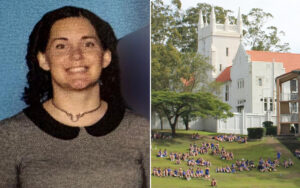
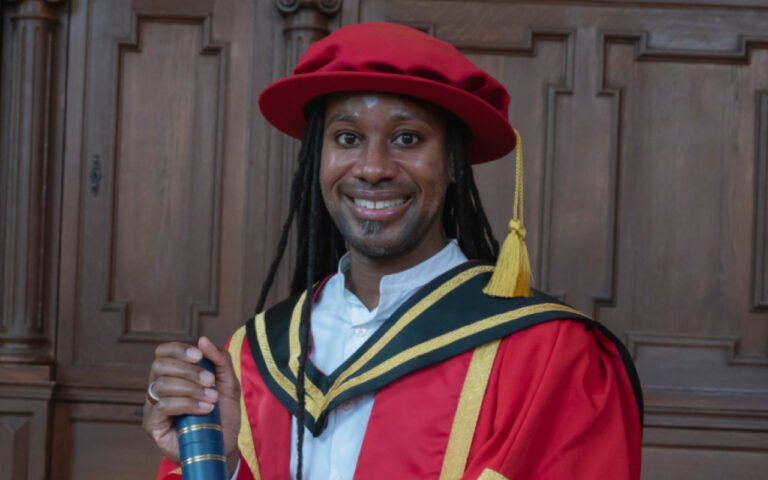
Header image: Jason Arday (St Mary’s University Twickenham).