A cashed-up Chinese textile company has been given a $10 million taxpayer-funded grant to set up a hemp factory in the NSW Riverina region despite biosecurity fears.
Ausuntech Pty Ltd, a subsidiary of Shanghai-listed Zhejiang Sunrise Garment Group, was given the grant as part of a federal and state government program that is supposed to generate jobs and help vulnerable communities, while local projects were rejected.
The company spent $121.25 million buying farming property Gundaline Station for the facility, is headquartered in a Melbourne mansion bought for $4.28 million in 2021, and is owned by Chinese textile manufacturing giant Zhejiang Sunrise Garment Group, and Hong Kong-based entities hold significant shareholdings in the Australian-based business.
But locals who have been hit hard by federal government water buybacks, say Ausuntech’s planned industrial hemp processing plant, west of Wagga Wagga, will be water-intensive and will create fewer jobs than initiatives proposed by Murrumbidgee Council, The Daily Telegraph reported.
The water buybacks, where water rights are purchased for environmental use, have had a devastating effect on agriculture in the region, and the Murray-Darling Basin Sustainable Communities Program was intended to help communities survive the loss of irrigation water.
Murrumbidgee Mayor Ruth McRae, Murray MP Helen Dalton and Nationals MP Nichole Overall have all criticised the grant decision, and Ms McRae blamed both Prime Minister Anthony Albanese and NSW Premier Chris Minns for the situation.
“$10m would have been a huge employment generator and we don’t see Ausentech’s project will achieve any comparable level of local employment,” Ms McRae said.
“The application submitted by Ausuntech Pty Ltd … appears to be a strategy to funnel public funds into a foreign-owned industrial operation that offers negligible employment benefits to the Darlington Point community.”
Ms Dalton said whistleblowers had provided evidence about biosecurity breaches at Gundaline Station, and that the funding should be frozen by the federal and state governments while an investigation is carried out.
“The grant should never have been made and the Minns Government needs to get our cash back from this company immediately,” Ms Dalton said.
“This money was never meant to become corporate welfare for foreign-owned businesses.
“How on earth could the minister be giving this business $10 million that should have gone to the rural towns that have lost their water, jobs and young people because of federal government water buybacks?”
Ms Overall asked NSW Agriculture Minister Tara Moriarty in parliament this week whether the government had investigated ongoing concerns about biosecurity, modern slavery and work safety before the grant was approved.
Ms Moriarty responded by calling questions about the grant “racist”, and accusing the Nationals of “chasing One Nation”.
“I did not expect them to come into the chamber and start asking racist-based questions on funding that has been delivered by this government,” she said in parliament.
But a day later she said in a statement the government had become aware of “a number of concerns” about Ausuntech, and said if information provided by the company during the application process was “incorrect or incomplete then the grant will be reconsidered”.
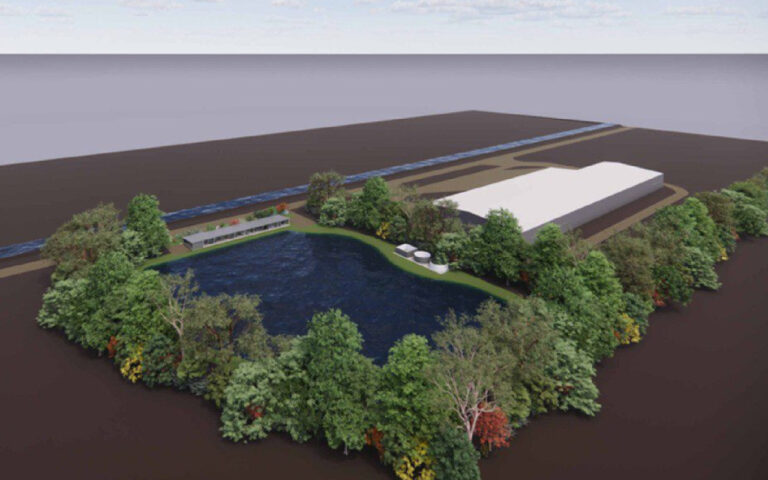
The Ausuntech facility, which has passed community consultation but is awaiting NSW Government planning approval, has been billed as Australia’s first large-scale hemp-processing plant for linen-quality fibre production.
According to planning documents, the processing plant will “produce hemp fibres, which would be baled and sent to China to produce raw materials for the production of clothing. The spinning and weaving process would be carried out overseas”.
Federal Minister for the Environment and Water Murray Watt said after the grant was announced earlier this month that the funding would “create jobs, stimulate growth, and strengthen long-term resilience”.
“The science tells us that we need to recover water to secure the long-term environmental health of the Murray-Darling Basin and the jobs and communities that rely on it,” Mr Watt said.
“In delivering a healthy river system, we need to support communities to adjust, which is why we’ve committed a record $300 million in funding to help minimise social and economic impacts of water recovery, including $160 million for Basin communities in NSW.”
Header image: An artist’s impression of the hemp-processing facility (SKM Planning via NSW Planning Portal).