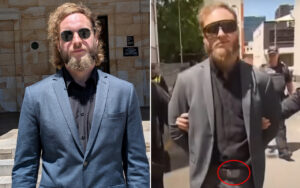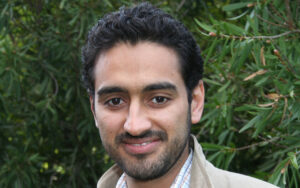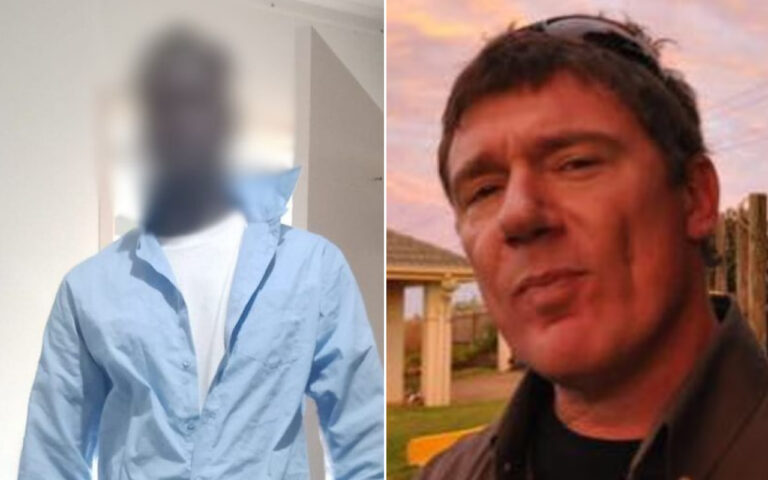
An African refugee criminal who stomped a photographer to death in Melbourne after being spared deportation has been found not guilty of murder due to mental impairment.
The killer, who last week had his identity and location protected by the courts and was given the pseudonym YF, stomped on the head of Dominic O’Brien, 62, eleven times during an unprovoked attack in Footscray in June last year, leaving him critically injured.
Mr O’Brien, who was a well-known photographer for major media outlets around Australia, died in hospital six days later, and YF was charged with murder and has been in custody ever since.
The Supreme Court of Victoria heard on Tuesday that YF pleaded not guilty on grounds of mental impairment, and both the defence and the prosecution had agreed the mental health defence was established by the evidence.
Justice Jacinta Forbes found the defence made out, directed that the not guilty verdict be recorded, ordered YF be placed under supervision, and granted the order supressing his identity on the basis publicity might “trigger” him and cause his mental health to “deteriorate”.
YF was among hundreds of immigration detainees who were released into the community by Labor following a High Court ruling in 2023 that a stateless Rohingya child rapist known as NZYQ could not be held in indefinite detention.
But Justice Forbes noted while making the suppression order that forensic psychiatrist Dr Rajan Darjee had testified that YF’s offending was not related to his immigration status, but to his “long-term poorly controlled mental health”.
The court heard that Border Force officers who detained YF immediately after the attack recorded him claiming that the victim had tried to rape him, and saying “that’s why I killed him”.
A second forensic psychiatrist, Dr Mark Ryan, found that “persecutory delusional ideas” played a significant role in YF’s offending, and that he was “floridly psychotic” as the result of a schizoaffective disorder.
Dr Darjee made similar findings, and also said that YF’s visa and immigration status was a contributing factor to his poor mental health.
The court heard that YF came to Australian on a humanitarian visa in 1998, with medical records showing a “severe and enduring psychotic illness” was diagnosed in 2001, followed by YF being admitted to hospital in 2003.
He then began committing a series of violent criminal offences leading up to his imprisonment for domestic violence in 2016, and the court heard that Dr Darjee said YF’s criminal history likely occurred “in the context of and due to him being psychotic”.
YF was also a user of cannabis and methamphetamine, but there were no illicit substances detected in his system at the time of the 2025 killing.
Dr Ryan and Dr Darjee found that while YF did know right from wrong, his mental health condition meant he “could not reason with a moderate degree of sense and composure about whether the conduct, as perceived by reasonable people, was wrong”, Justice Forbes said in her judgment.
“I accept the psychiatric opinions. Both doctors are very experienced forensic psychiatrists. Both were engaged as independent experts whose overriding obligation was to assist the Court in determining the availability of a mental impairment defence to the charge,” she said.
“The statements attributed to YF, the behaviours seen on CCTV and as described by witnesses, all support the conclusion that YF was experiencing a psychotic episode with delusions, such that his ability to think was so disorganised and affected by delusion, hallucination and the other symptoms of his schizoaffective disorder, that he lacked the ability to reason rationally or sequentially or logically with a moderate degree of sense and composure.
“The effect of his mental impairment is established.”
Header image: Left, YF (supplied). Right, Dominic O’Brien (Facebook).