While browsing an airport bookstore before a lengthy flight recently, the latest Quarterly Essay caught my attention. Whenever I find myself in a bookstore, I often peruse the Quarterly Essay for a quick laugh. There really is no substitute if you want to watch establishment libtards finger-wag about [current thing] without any semblance of self-awareness or humour. The current issue, however, not only failed to raise a laugh but actually turned out to be a well-argued investigation of the inherent contradictions of liberalism, and emerging post-liberal alternatives. And it was written by Waleed Aly. For a minute, I thought I was dreaming.
Waleed Aly has long been pigeon-holed by the Australian right as a smug brown liberal. To a large extent the label is unfair – this was the niche that was assigned to him in the legacy media ecosystem in which he emerged during the 2010s. Aly has always been far better-read and politically open-minded than his public image might suggest. That he would take a sudden interest in post-liberalism is not as implausible as it first appears.
In Time Of Monsters Aly genuinely weighs alternatives to liberalism without the instinctive sneer or hysterical denunciation which is the default reaction of most establishment types when forced to contemplate the fact that they have no monopoly on political ideas. That he does this through the medium of the Quarterly Essay (which is basically Australia’s ruling class talking to itself) makes it even more groundbreaking. For this alone we should applaud Aly, even if we cannot share his assumptions or his conclusions.
While his skin tone, background and religion may make him exempt from being cancelled for having such a heretical attitude, he is nonetheless taking a distinct risk. After all, we live in an age where people are arrested almost every month for the crime of posting swastika.jpg on Twitter.
In that spirit, let’s first examine what makes the essay worth reading. To start with, Aly begins his essay from the assuredly non-liberal position that liberalism is a fallible system of thought born from a specific context in European history. Indeed, he not only acknowledges cyclical history, but makes the argument that this was the actual historical mode of all pre-modern peoples (name-dropping Ibn Khaldun no less).
Aly also correctly points out that the only acceptable framing of political decisions and ideas in Western societies is liberalism. Mainstream left and right both furiously agree on the destination – the only thing that separates them is how to get there.
The middle part of the essay is devoted to tracing the development of liberalism as an ideology. Aly notes that the different forms of liberalism, from Hobbes (who he casts as a precursor of liberalism) down to Rawls, all have very different conceptions of basic liberal concepts. He notes that some aspects of these theories survived to become the liberal mainstream, while others were relegated to the history of ideas. The end result has been a kind of lowest common denominator liberalism that’s unable to articulate any kind of shared moral standards or philosophical defence beyond the “harm standard” (everything is allowed, provided it does no harm to others).
It is this that Aly blames for the present dissatisfaction with the liberal status quo, as it limits both the mental paradigm and political options available in resolving the cascading series of crises that have hit the West since 2001.
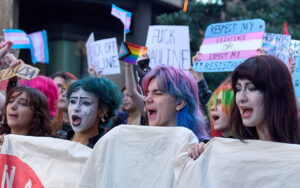
The best part of the essay is, however, his analysis of the post-liberal left and post-liberal right. Aly never explicitly states which side he supports more, but it’s pretty clear that his sympathies lie with the right. While briefly considering the revival of democratic socialism (and Marxism), he primarily views “woke” as the key manifestation of post-liberal thought on the left. For Aly, “woke” is incapable of providing any kind of coherent post-liberal programme, as it is a post-modernist grab bag of grievances. It fundamentally denies that rational politics is even possible, as all social relations are viewed as a struggle between exploiters and the exploited. While Aly doesn’t mention the example, the BLM riots of 2020 are a perfect illustration. There were no realistic political demands from the rioters and their handlers, just a desire to racially humiliate White Americans by destroying their symbols and getting them to quite literally kneel to blacks.
What, then, of the post-liberals of the right? Aly appears to have a strong sympathy with the idea that a functional society must be built around a shared identity. Of course, for Aly this means attachment to a common set of moral principles, and not blood and soil. He bizarrely associates this position with the Trump administration’s JD Vance and Stephen Miller, who are respectively in a mixed-race marriage and Jewish. Indeed, the only thing that stops him from using the hackneyed conservative term “Judeo-Christian values” is his desire to include Muslims in the Abrahamic coalition.
All up, it’s difficult to see how this conception of post-liberal thought on the right differs much from conservatism. Aly even offers up perennial gatekeeping lolcow Rod Dreher as one of his primary examples of post-liberal thought. But as we all know full well the essay would never have been published if Aly had included thought from actual dissident right intellectuals like Neema Parvini, Mike Maxwell or Joseph Jordan. Sometimes you just have to take things as they are, and having a regime-approved intellectual use the words post-liberal right without running screaming from the room is enough (for now). We can at least be thankful that Aly didn’t include the astroturfed Zionist “National Conservatives” in his definition.
Aly is on much firmer ground when he criticises the post-liberal right for its lazy assumption that it can put everything that liberalism broke back together again purely through taking the reins of the managerial state. Without first changing the political paradigm, it is absolutely true that any top-down changes are doomed to fail. As the author accurately points out, the present political paradigm offers no legitimacy for social engineering from the right. Thus with Trump, Orban and other populists, all of their much vaunted reforms were effortlessly swept away by the next leftist government to obtain office.
Aly concludes his argument without rejecting the post-liberal right, but without much enthusiasm for it either. He claims that the inability of liberalism to determine a goal or positive moral framework for individuals (such as virtue) destroys its ability to define the common good for society. The end result is social fragmentation, political paralysis and an ultimate inability to make sovereign decisions. This, ironically, is a position not far removed from Carl Schmitt’s critique of liberalism and parliamentary democracy. There are even shades of Schmitt’s commentary on Leviathan, where he traces the main fault of liberalism back to Hobbe’s desire to exclude private belief from the otherwise total discipline of the state.
Unlike Schmitt, Aly is vaguely hopefully that liberalism can overcome its own contradictions, lest the titular monsters “might truly be unleashed”. I assume by monsters he’s referring to me, you and everyone else who reads The Noticer, in which case the pessimism with which Aly ends the essay can only be a whitepill for the rest of us.
While there is much to enjoy in the essay, there are a number of points where Aly’s analysis falls short.
Where he primarily comes unstuck is his implicit assumption of political formalism – that the system functions largely as it says it does. If the ruling class of Australia and other Western countries frame their political discourse in liberal terms, then it must follow that the power structure is influenced by liberal ideology. It never occurs to Aly at any point in the essay that the political terms used by the current elite to legitimise their decisions may actually be referring to something completely different to their original definition. Or that de facto sovereignty may ultimately lie outside the de jure sovereignty found in the formal structures of government.
As James Burnham, Samuel T Francis, Paul Gottfried and many others have noted, today’s governments have almost nothing in common with the classical liberal governance of the 19th century. Only the terms remain. In many cases the terms even mean the exact opposite of what they once signified. For example, the term “rights” once referred to the concept of restricting state power so that it would not infringe on areas of life believed to be beyond the remit of the state such as religious belief. The same word now refers to the imperative of the state to expand into all areas of life in order to bring about functional equality between individuals, including by forcibly modifying the personal beliefs of citizens. The only way that you can reconcile the pre-1945 liberal state with the post-1945 managerial state is to expand the term liberalism to the point where it is functionally meaningless.
Ironically, by ignoring the material factors of history, Aly ends up fundamentally misunderstanding the idealist ones. If liberal ideology really had been taken to its logical conclusions, as Aly suggests, then we would be living in Murray Rothbard’s anarcho-capitalist utopia. The fact that we live in a very different type of society should be enough to show that ideas do not drive social change, but follow it.
This feeds into the second major mistake that Aly makes in his analysis – the assumption that the primary weakness of liberalism is its lack of teleology.
Aly (like Schmitt) is not far wrong in this. His main problem is that he remains focussed on the way that the system justifies its actions and not on the underlying apparatus of power. What he says is true of liberal democracy, but that system stopped existing many years before any of us were born.
During its transition to managerialism, liberalism did find a teleology – freeing the individual from all relations and attributes that are not explicitly chosen. In other words, it tried to remove people from what Heidegger calls “thrownness” – those things like blood, sex, culture, religion, language and historical positioning that condition the human experience prior to conscious thought. Above all, it is a holy war against any formation of identity based on these factors.
The culmination of this process can be seen in two apparently bizarre phenomenon of our time – transgenderism and Whites identifying as people from other races (usually an allegedly oppressed group like aboriginals or African Americans). They are attempts to escape the ultimate form of non-chosen attribute, which is genetics. Another form that hasn’t been seen yet, but which will only become more relevant in future is transhumanism of the Nick Land variety. This will undoubtedly be the “based” version of the ideology that the system will sell to right-wingers.
Of course, the endpoint is a logical absurdity – how can we choose our attributes and relations if we’ve been stripped of anything that would allow us to have those preferences in the first place? If everything is a “social construct” that can be modified, then being a member of an oppressed group becomes an act of choice, and the idea that it’s the ultimate sin to discriminate against people because of inherited characteristics becomes meaningless.
That the endpoint makes no sense is no impediment in political terms, however. All politics ultimately rests on command, and even worse absurdities have been used to command men in the past. And this particular form of narrative command has been extremely useful in expanding the power of the managerial state to an almost unlimited degree, which is why questioning it becomes an existential issue for all of those social groups that rely on the state for material or ideological reasons.
Aly chooses to conduct an investigation of ideas divorced from power, and as a result he cannot grasp the fundamental reorientation of liberalism that occurred when it became the state religion of the managerial class.
Despite these faults, I’d say that the essay is worth a read, even if only to understand how the establishment is dealing with the collapse of liberal ideology.
After all, if Waleed Aly can say it, how many more members of the establishment are thinking the same thing?
Header image: Waleed Aly Z (Canvas78 – Own work, CC BY-SA 3.0).