Immigrants are exploiting a visa loophole to enable their elderly parents spend the rest of their lives in Australia on temporary visas and get free medical treatment despite being ineligible for Medicare, a healthcare sector whistleblower has revealed.
The industry insider described the scam as “underground economic extraction”, and told Noticer News it was “systematically bleeding our public hospital system dry” while everyday Australians are hit with rising prices and massive tax burdens.
They said that immigrants, usually from non-reciprocal healthcare countries like India, were bringing their elderly parents into the country on tourist visas after obtaining permanent residency or citizenship, and then sponsoring them for Aged Parent (subclass 804) visas.
But because it now takes an estimated 33 years to process an Aged Parent visa, onshore applicants are given Bridging visas, effectively allowing them to stay in Australia indefinitely.
When the parents inevitably develop health conditions, their families take them to public hospital emergency departments and claim “financial hardship”. In some cases the families refuse to take them home again, and hospitals cannot legally or ethically turn them away, the whistleblower said.
In order to prevent the parent visas from being cancelled due to the medical debts, family members working as subcontractors in the gig economy use business deductions to reduce their taxable income and qualify for hospital financial hardship waivers, or set up debt management plans with tiny weekly repayments.
Then when the Aged Parent visa holders die, their medical debts are written off by the public health system, costing Australian taxpayers tens of millions of dollars every year.
NSW Health wrote off almost $20 million in unrecoverable debt out of $64 million in unpaid medical bills in 2019, according to a report by the Auditor-General, and charged $114.6 million to about 16,000 Medicare-ineligible patients in the 2018-19 financial year.
Queensland reported being owed $44 million in unpaid patient bills in 2021, mainly from Medicare-ineligible patients, while other states have not published comparable data.
Last year, industry group the Healthcare Financial Management Association (HFMA) warned that Medicare-ineligible patients were having a “rising impact” on public hospital finances, and said there was a “growing need for national data on Medicare ineligible write-offs to support policy advocacy”.
The HFMA also noted that “health services reported difficulties securing upfront payments from overseas patients and navigating fragmented visa and eligibility rules”, and that “many [hospitals] continue to provide care due to ethical obligations and unclear legal boundaries”.
“This is a structural collapse of our border and public infrastructure integrity run by unelected technocrats who simply write off the losses,” the whistleblower said.
“The public deserves to know the real figures behind these institutional write-offs.
“Nothing works for the people of Australia anymore. We’re just the suckers who pick up the tab while quality of life disappears down the toilet.”
As of August 31 this year there were 440,000 Bridging visa holders in Australia, up from 176,000 in June 2023.
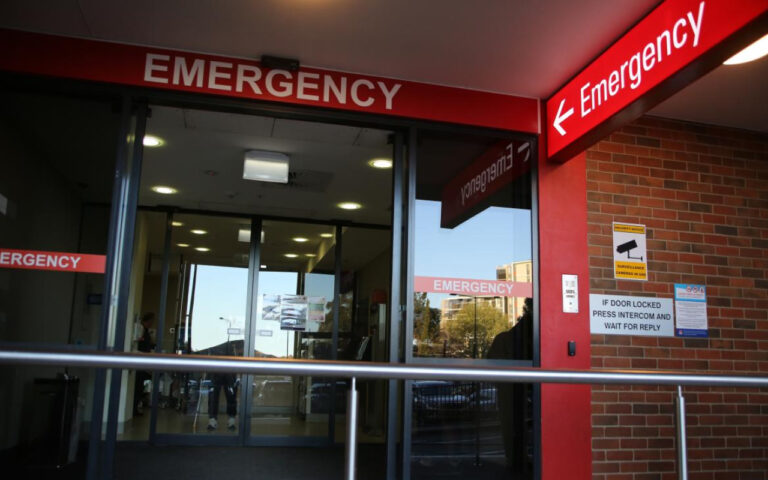
Header image: An emergency room in Sydney (NSW Government).