Any political party in Australia can easily be banned as prohibited hate group for comments made by members in the past, a legal expert has warned, and called the new legislation a “dangerous weapon”.
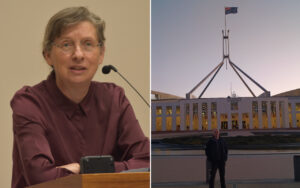
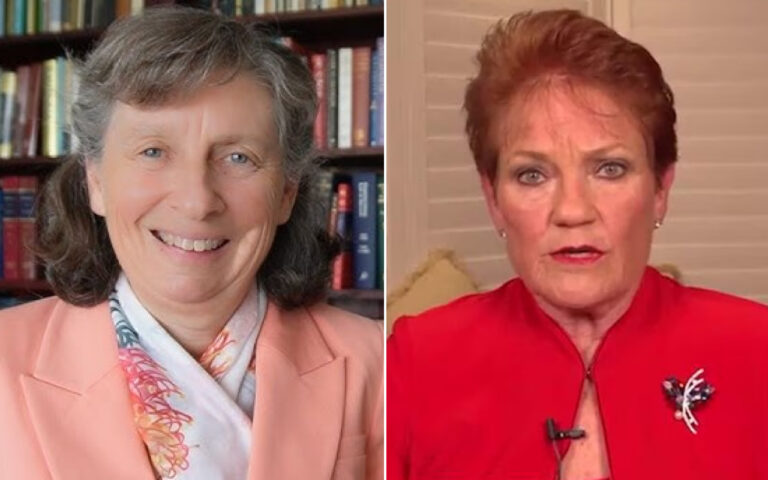
Dr Anne Twomey, Professor Emerita in Constitutional Law at the University of Sydney, released a video on her Constitutional Clarion YouTube channel on Sunday titled The Challenge By ‘White Australia’ To The Prohibited Hate Group Law.
In the 19-minute video Dr Twomey explained how the laws operate, and went on to address the arguments set to be used by the White Australia Party, which was banned by the government on May 15, in its upcoming legal challenge to the constitutional validity of the legislation in the High Court of Australia.
Dr Twomey noted that a group can be banned due to the actions of “rogue” or informal members, and stressed that a group or its members do not need to have committed a crime for their actions to be considered a “hate crime” by the AFP Minister, who can then ban the organisation.
“No one needs to have been convicted by a court, and conduct can be a ‘hate crime’ even though it happened in the past when it was not a crime. It is enough for the Minister to be satisfied on reasonable grounds that the group has engaged in or been associated with conduct constituting a ‘hate crime’,” she said.
“This means it is the Minister, rather than a court, who assesses that the group has engaged in such conduct. There is no independent assessment of whether that conduct occurred, whether it satisfied the terms of any offence, whether it could be attributed to the group, or whether any defences apply.
“It is just up to the Minister to be satisfied – without evidence, without a hearing, and without procedural fairness. Moreover, it seems that the conduct in many cases could have occurred at any time in the past, no matter how long ago, and certainly before that conduct became an offence.
“Given the past rhetoric of members of political parties about racial, immigration and refugee matters, it would not be hard to satisfy this criterion in order to ban any political party.
“This makes it a very dangerous weapon for a future authoritarian government to use.”
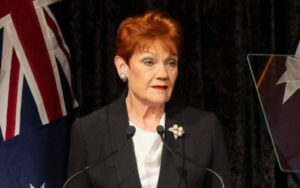
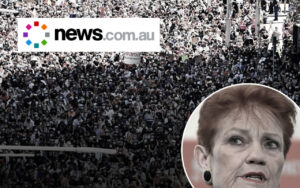
One Nation leader Pauline Hanson expressed concerns after the laws were passed that they might be used against her party, and has since vowed to repeal them and all other “hate speech” legislation, but has not commented on the White Australia Party’s legal challenge.
Ms Hanson has regularly been accused of racism “hate speech” by far-left extremists, ethnic lobby groups and her political opponents, including over recent comments made about Muslims which were reported to police, and for wearing a burqa into the Senate.
Some media is trying to claim I went on some kind of ‘tirade’ last night.
I guess they aren’t used to hearing a politician tell the truth without worrying about political correctness.
The fact is we have to ban the importation of radical Islam that hates western society,… pic.twitter.com/o5N2plrBSD
— Pauline Hanson 🇦🇺 (@PaulineHansonOz) February 16, 2026
Dr Twomey also warned in her video that the laws were “self-fulfilling”, as they also required the Minister to be satisfied that “banning the group is reasonably necessary to protect the Australian community or a part of it from social, economic, psychological and physical harm”.
“Psychological harm could mean almost anything, and it is stated in the Act to include harm caused by the continued presence in Australia of the group that has engaged in or been associated with ‘hate crimes’. So it is actually a self-fulfilling condition,” she said.
She went on to give her opinions on two of the three arguments set to be deployed by the White Australia Party to try to strike down the laws – the absence of a head of legislative power, and a breach of the implied right to freedom of political communication.
In her discussion of the first argument, Dr Twomey said there were key similarities and differences between the the White Australia Party case and the famous 1951 Communist Party case which was struck down as invalid.
But the professor said she anticipated the major constitutional issues would arise in relation to the implied freedom of political communication, due to the “breadth, the vagueness and the discretion” in the legislation.
“One could imagine that a far more narrowly tailored law could achieve any legitimate end without imposing such an extreme burden on political communication. In short, there is a good argument that it is disproportionate in its application,” she said.
“The outcome of course will depend upon how it is argued before the court, which none of us can dictate or predict. It will also require putting aside any personal objection to the plaintiff in this case and its ideology and instead placing the focus squarely on the long-term application and the validity of this law.”
Dr Twomey said she might deal with the third constitutional argument, which concerns the separation of powers and punitive action by the executive, in a subsequent video.
The White Australia Party and Thomas Sewell, representing 1,788 former party members, said in documents filed with the High Court this week that the laws “operate as a doorway to tyranny, by empowering the Executive to name, suppress and criminalise political opponents and opposing views”.
The High Court accepted the case on Thursday, and it returns to court in the first week of June for an interlocutory hearing to rule on an application for temporary protection from the laws while the matter is being determined. The constitutional arguments are set to be heard in mid-September.
Header image: Left, Anne Twomey (YouTube). Right, Pauline Hanson while making her comments about Muslims (Sky News).