Australia’s leading Anglo-Celtic advocacy group has called on the High Court to strike down the government’s prohibited hate group laws, saying they have no place in a democracy.
The controversial laws, passed with the support of both major parties after the Bondi Islamic terrorist attack, give the government the power to ban organisations even if no crimes have been committed, and have been criticised by MPs, legal experts and civil liberties groups.
On May 15 the legislation was used to ban the White Australia Party, sparking a constitutional challenge by the Party and Thomas Sewell which is due to be heard by the High Court in Canberra on Tuesday and Wednesday.
The British Australian Community (BAC) spoke out on the eve of the landmark case, which is set to determine whether the government can bypass the criminal justice system and unilaterally ban rival political parties.
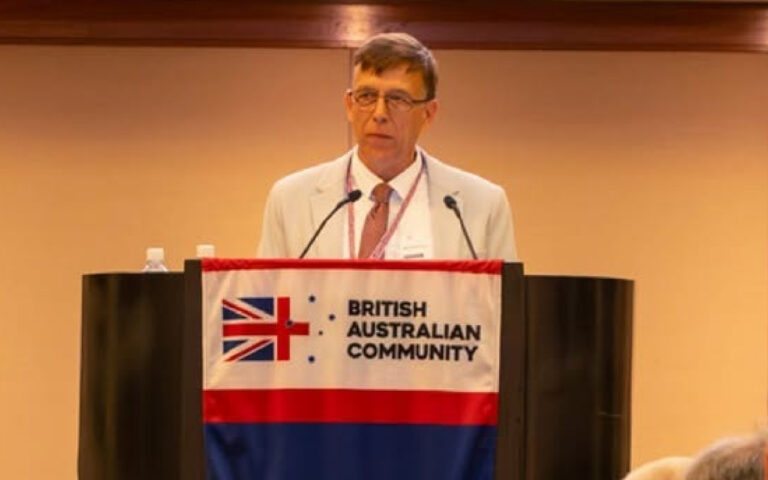
BAC President Harry Richardson said on Monday that the legislation was a “political weapon”, and that he feared it could be used against ethnic and political associations.
“Australia already possesses terrorism laws, incitement laws and offences against violence, this regime goes further. It lets the government decide which associations may organise, recruit and seek public support. This can, and probably will, include ethnic and political associations,” he said.
“In practice that power will not fall evenly. Every other community is expected to practice ethnic politics. Advocacy for its numbers, its culture, its group interests and its place in the new hierarchy.
“The founding Anglo-Celtic people are told that the same conduct is an ill-defined, or even undefined, wrong called ‘hate’.”
Mr Richardson went on to say that the law was not compatible with representative democracy, which requires citizens to be able to form their own parties to represent their interests.
“The Constitution insists that parliamentarians be directly chosen by the people. That requirement is emptied of meaning if the government can simply remove inconvenient participants before an election by labelling their organisation a prohibited hate group,” he said.
“This is the kind of law that would be expected in a totalitarian banana republic like Saddam Hussein’s Iraq, and not a first world, constitutional democracy like Australia.
“If the High Court does not strike this law down, Australia will be a democracy in name only.”
The White Australia Party’s lawyers are challenging the legislation on three grounds – that the Commonwealth has exceeded its legislative power, that the laws impermissibly burden the implied freedom of political communication, and that it breaches the separation of powers.
Australia’s most respected constitutional law expert, Dr Anne Twomey, has written an in-depth analysis of the prohibited hate group laws, the arguments being made in the White Australia Party case, and the potential ramifications of the High Court’s decision, which can be read here.
Header image: Harry Richardson (BAC).