A Sri Lankan doctor has been suspended from practicing for just three months for touching a medical student on her inner thigh and buttocks during her work placement at his GP clinic in regional Victoria.
Dr Widana Pushkara Epa, who is aged in his late 50s and did his medical training in Belarus before moving to Australia in 2009, was given the temporary ban by the Victorian Civil and Administrative Tribunal (VCAT) on Tuesday, 19 months after it ruled he sexually harassed the student.
A panel of three VCAT members noted that an “administrative oversight” had caused a long delay, and that Dr Epa had the proceedings “hanging over him” for about five years, which they took into account when making their decision.
The Medical Board of Australia and a representative for Dr Epa jointly asked for a reprimand and a three-month suspension, but despite this the doctor’s lawyer submitted that a fine should be imposed instead.
The lawyer told the tribunal Dr Epa’s conduct was “completely out of character” and not sexually motivated, that the investigation and VCAT proceedings had caused Dr Epa “deep unhappiness” and “despair”, and that he had “effectively suspended himself for 21 months” as a result.
Dr Epa submitted through his lawyer that he never intended to cause the student any pain and “through his deep Buddhist faith prays that her suffering will come to an end and that she will have a long and rewarding career in medicine”.
But the panel found that nothing less than three months’ suspension would be adequate, and said there was a need for general deterrence for the protection of the public.
“We intend to send a clear message to members of the medical profession that sexual harassment and taking advantage of a power imbalance will not be tolerated,” the panel stated.
“We intend that doctors will have clearly in mind that serious adverse consequences will follow conduct of the kind that Dr Epa engaged in.
“We intend that other doctors will be deterred from any form of sexual harassment or taking advantage of a power imbalance, in the interests of maintaining professional standards and public confidence in the medical profession.”
Costs will be determined at a later date.
The tribunal previously heard that on October 16, 2021, Dr Epa touched the hip and thigh of the student, anonymised as Ms P, while she was performing an excision on a patient, and later that day asked for her address and phone number, although the latter request was not found to be a breach.
On October 20 he placed his hand on Ms P’s inner thigh for about two minutes on one occasion, and then on several other occasions that were “inconsistent with the contact being necessary, accidental or otherwise unintentional”, the tribunal found.
The next day Dr Epa placed his hand on her inner thigh again, placed his left arm around her waist and buttock region, and asked her if he could come to her house.
Dr Epa claimed that he had been unfairly or wrongly accused of sexually harassing Ms P and that he had absolutely no intention of inappropriately touching or harassing her.
But the panel stated that despite Ms P not being prepared to say categorically at the hearing that Dr Epa was sexually motivated, they were comfortably satisfied that his “conduct in touching Ms P in the way he did (on 20 and 21 October but not 16 October), was sexual conduct”.
“His physical contact with Ms P was not necessary or accidental or otherwise unintentional. It was repeated. Of particular significance is that it involved parts of the body generally understood to be ‘private’,” the panel stated.
“The touching included Dr Epa rubbing, brushing, stroking or caressing Ms P, or leaving his hand on her for longer than could be consistent with accidental or otherwise unintentional contact.”
“We are comfortably satisfied that his conduct in touching Ms P in the way he did (on 20 and 21 October but not 16 October), amounted to sexual harassment of Ms P.
“We indicate further that we are comfortably satisfied that by his conduct in touching Ms P in the way he did (on 20 and 21 October but not 16 October), Dr Epa took advantage of the power imbalance between supervisors/assessors and students.”
Ms P was found to be a “credible and reliable” witness, and the panel noted that she was “evidently unwilling to take the step of attributing to Dr Epa a sexual or ‘malicious’ motivation”.
She told a friend and fellow student known as Witness C that she did not want Dr Epa to get in trouble, and when asked about that statement by Dr Epa’s counsel she “expressed apprehension that she could suffer adverse consequences as a whistleblower in the medical profession”.
She did not return to the clinic after October 21 and finished her placement elsewhere.
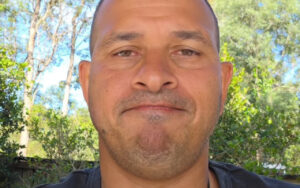
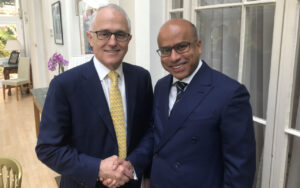
Header image: Dr Epa (supplied).