Twin teenagers who stomped on a stranger 60 times in a vicious attack in Adelaide, leaving him disabled, have been jailed for less than three years after a judge took their aboriginality into account.
The two men cannot be named as they were 17 at the time of the attack, but were dealt with as adults while being sentenced in the South Australia District Court due to the gravity of the crime.
The twins, now 18 and anonymised as KS and TS by the court, both pleaded guilty to “aggravated causing serious harm with intent to cause serious harm”, an offence that carries a maximum penalty of 25 years in prison, but were given non-parole periods of just two years and six months each.
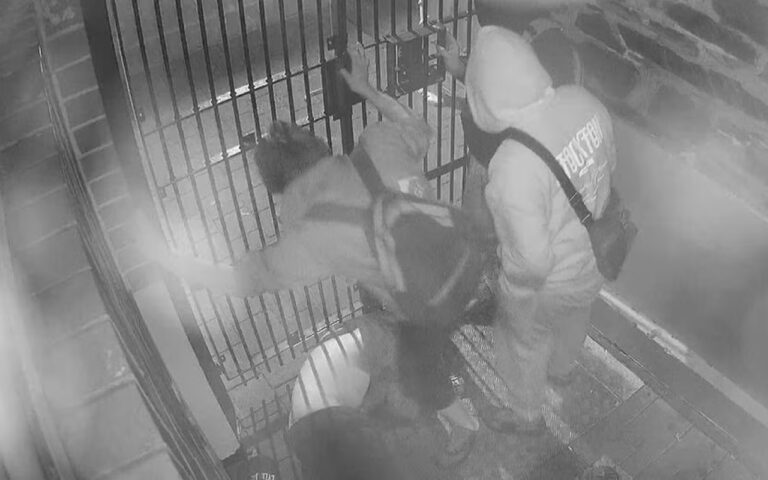
CCTV footage obtained by The Advertiser shows the twins following their victim down an alley outside the Salvation Army Sobering Centre at Whitmore Square on April 24, 2025, before knocking him to the ground and punching, kicking and stomping on him dozens of times.
Judge Nick Alexandrides noted in sentencing that the victim’s ear was almost severed in the attack, and that the man suffered a very severe traumatic brain injury, post-traumatic amnesia, and will experience significant and permanent cognitive impairment.
A victim impact statement provided by the man’s mother stated that her son’s life had “changed forever” as a result of the attack, and that he “had to learn to walk and talk again, due to the injuries sustained, and he is now unable to live independently”.
Both KS and TS told a sentencing conference that they carried out the attack due to “distress and anger” over the recent death of their grandmother, and TS said that he hoped the victim “might one day understand the personal difficulties [he was] experiencing at the time”, the judge told the court.
The court heard that KS was from a background of “significant disadvantage”, had been referred to NDIS support, suffered from prenatal alcohol exposure, and tested in the lowest 1% for oral language functioning and the lowest 4% for overall intellectual functioning.
“The material before the court establishes significant neurodevelopmental impairment, including a provisional diagnosis of foetal alcohol spectrum disorder, together with entrenched social disadvantage. Those matters are relevant to the assessment of moral culpability and prospects of rehabilitation,” the judge said.
The court heard TS also experienced “significant childhood adversity including exposure to domestic violence, physical abuse, homelessness, parental illicit substance abuse and neglect”, and had been diagnosed with an intellectual disability due to his “extremely low” overall cognitive functioning.
TS also abused alcohol and cannabis from a young age, and the court heard he claimed he was “easily triggered, and can respond with anger when [he] perceive[s] others to be unkind or threatening”.
“You are a young person of Aboriginal descent whose circumstances reflect recognised forms of disadvantage. You have experienced significant social disadvantage and intellectual challenges. These matters have affected your emotional regulation. You have supports now in place which improve your prospects of rehabilitation,” the judge told him in sentencing.
Judge Alexandrides told the court he believed the twins’ social disadvantage and intellectual impairment required “some moderation of sentence”, and said there was a “basis for a cautious optimism for rehabilitation”.
“When weighed against the objective seriousness of the offence these factors provide some though limited mitigation particularly in light of the need to protect the community,” he said.
He sentenced both to four years and six months’ imprisonment with identical non-parole periods of two years and six months, but said he would not suspend either sentence, as doing so would not protect the community or provide adequate deterrence.
Header image: CCTV footage of the attack (SA District Court).