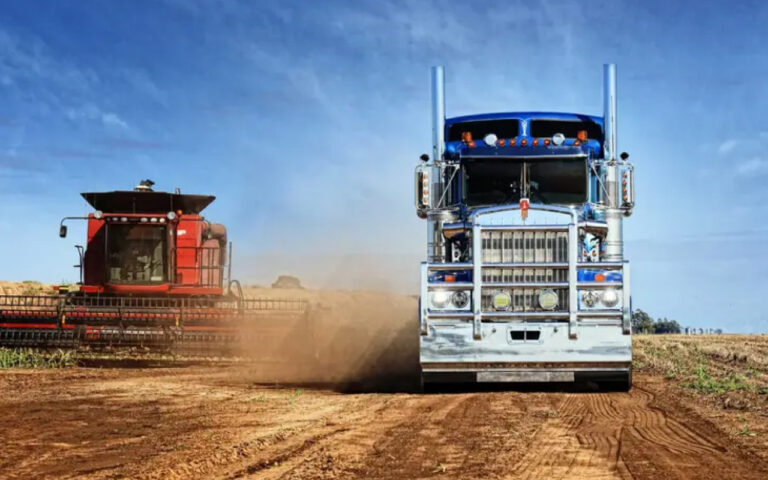
Australia’s trucking industry has warned rising fuel prices are set to force heavy vehicle fleets off the road, resulting in grocery price spikes and empty supermarket shelves by mid-April.
Road freight operator representative body the National Road Transport Association (NatRoad) warned the war in the Middle East has already caused a 70% rise in fuel costs since early March, which would be passed on to supermarket shoppers.
Prime Minister Anthony Albanese insisted there was no fuel shortage this week while announcing the formation of a Fuel Supply Taskforce, saying oil tankers already en route to Australia would continue to arrive over the next month, but fuel is already at record-high prices with service stations running dry.
NatRoad CEO Warren Clark told the Australian Business Network road freight businesses were already unable to afford the cost of diesel due to razor thin margins, and predicted higher delivery costs would translate into products missing from grocery stores.
“Some [operators] can’t really absorb the costs and I’ve had members reporting that they’ll be forced to park up their trucks because of the cost of the fuel,” Mr Clark said.
“We probably haven’t a large impact on the supermarket shelf [yet], but we’re thinking that [will happen] roughly around mid to end of April. The cost of fuel has to be worn by the end customer or people can’t actually operate in business. They actually can’t make their contracts work.
“We’re hearing of people going, ‘Look we own our trucks, we’re just going to park them up because we can’t afford to run them. We’ll go broke running them’.”
NatRoad is calling for the government to immediately remove the Road User Charge for heavy vehicles and activate disaster recovery funding arrangements.
“Diesel prices have surged by around 80 cents per litre since early March, driven by global supply disruption,” Mr Clark said in a statement on Tuesday.
“This is not something small operators can absorb or pass on. It is an external crisis, and it requires a Government response.”
Rideshare giants Uber and Didi announced price rises this week, and taxi operators are calling for surcharges as a result of rising fuel costs.
Didi added a 5c/km fuel surcharge, while Uber a permanent fare increase that would increase driver earnings by an average of 6% across Australia.
Israel’s bombing of Iran’s South Pars gas field and Iran’s retaliatory strike on Qatari gas infrastructure on Wednesday sent shockwaves through global energy markets, further pushing up oil prices which had already risen due to the ongoing closure of the Strait of Hormuz.
The closure of the key shipping route has cut an estimated 20% of global oil supply, and pushed prices above US$100 a barrel, a situation Treasurer Jim Chalmers warned in a pre-Budget speech could worsen and last for as long as three years if the conflict is prolonged.
Australia produces most gas consumed domestically but is dependent on imported oil, and the war in Iran has also disrupted the supply of urea fertiliser, which farmers warned will result in higher food prices.
The government said this week there was no need to panic buy as Australia had 36 days of petrol, 29 days of jet fuel and 32 days of diesel, but the country gets its supplies from Asian refineries, which are in turn dependent on oil from the Middle East via the Strait of Hormuz, and China has halted aviation fuel exports to Australia.
Header image credit: NatRoad.