The UK government is pushing to make the countryside less of a “White environment” by bringing in more ethnic minorities and taking aim at traditional pubs and dog walkers.
Officials in some of Britain’s most peaceful and picturesque areas, including the Cotswolds and the Chilterns, have signed up to the initiative, which is coordinated by the Department for Environment, Food and Rural Affairs (DEFRA), The Telegraph reported.
DEFRA reports from 2019 and 2022 resulted in Areas of Outstanding Natural Beauty being renamed as National Landscapes, which they claimed would become “irrelevant” in Britain’s increasingly multicultural society as they were mainly enjoyed by White people.
“We are all paying for national landscapes through our taxes, and yet sometimes on our visits it has felt as if National Parks are an exclusive, mainly White, mainly middle‑class club,” the 2019 report stated.
“Many communities in modern Britain feel that these landscapes hold no relevance for them. The countryside is seen by both black, Asian and minority ethnic groups and White people as very much a ‘White’ environment. If that is true today, then the divide is only going to widen as society changes.”
The 2022 report, titled “Improving the ethnic diversity of visitors to England’s protected landscapes”, found that ethnic minorities believed the countryside was a “White space” and that facilities catered to “White English culture”.
“Protected landscapes were closely associated with ‘traditional’ pubs, which have limited food options and cater to people who have a drinking culture. Accordingly, Muslims from the Pakistani and Bangladeshi group said this contributed to a feeling of being unwelcome,” the report stated.
“Perceptions of protected landscapes as being for White people and middle-class people could be a powerful barrier for first-generation immigrants.”
As a result, a number of National Landscapes officials and local councils have made plans to address diversity, including in the Chilterns, which is proposing community outreach schemes to attract Muslims to the area from the nearby city of Luton, which is at least one-third Islamic.
The team also plans to use ethnic minorities and “community languages” in marketing material and recruit more non-White staff, and has commissioned research which suggested tougher rules for dogs because some non-White groups fear them.
The Cotswolds National Landscape management plan states it will aim to reach the “widest possible demographic”, while Dedham Vale has committed to identify and address “barriers facing under-represented and/or diverse groups which limit equal access”.
The Malvern Hills National Landscape said it was developing “strategies to reach people or communities with protected characteristics such as people without English as a first language”.
“Many minority peoples have no connection to nature in the UK because their parents and their grandparents did not feel safe enough to take them or had other survival preoccupations,” their proposal said.
“While most White English users value the solitude and contemplative activities which the countryside affords, the tendency for ethnic minority people is to prefer social company (family, friends, schools).”
Nidderdale National Landscape pledged to “develop more inclusive information to reflect more diverse cultural interpretation of the countryside”, and Cranborne Chase National Landscape promised to “reach people or communities with protected characteristics such as people without English as a first language”.
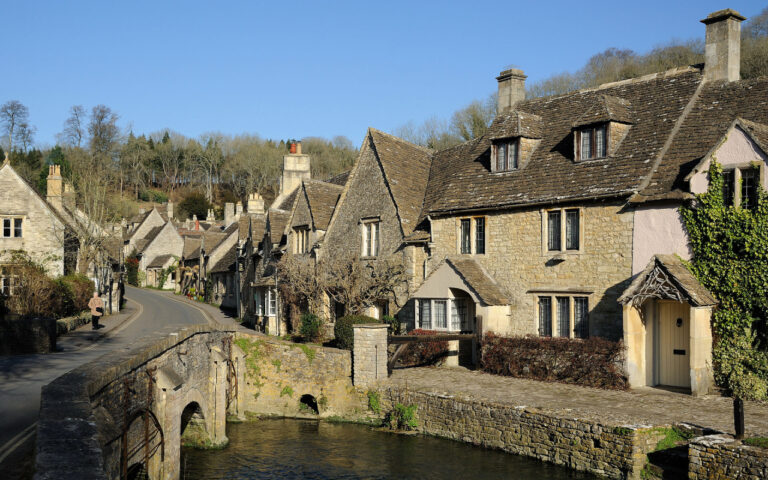
Header image: Castle Combe in the Cotswolds (By Saffron Blaze – Own work, CC BY-SA 3.0).