Australia has quietly tightened student visa rules for applicants from India and four other South Asian countries, reversing assessment level changes made late last year.
On January 8 India, Nepal, Bangladesh and Bhutan were moved from Level 2 (moderate risk) to Level 3 (higher) risk, and Sri Lanka was moved to Level 2 for the lowest risk level, according a Department of Education update confirmed by Home Affairs.
The Level 3 rating means students will be subject to more stringent documentation requirements that could include upfront evidence of financing and course-specific English tests.
“This change in Evidence Levels will assist with the effective management of emerging integrity issues, while continuing to facilitate genuine students seeking a quality education in Australia,” the department said.
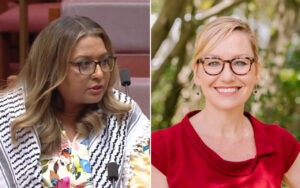
The change comes amid growing concern over a fake Indian degree bust late last year that was highlighted on Tuesday by One Nation senator Malcolm Roberts, who linked it to a crackdown on dodgy colleges where more than 23,000 foreign students had their qualifications cancelled.
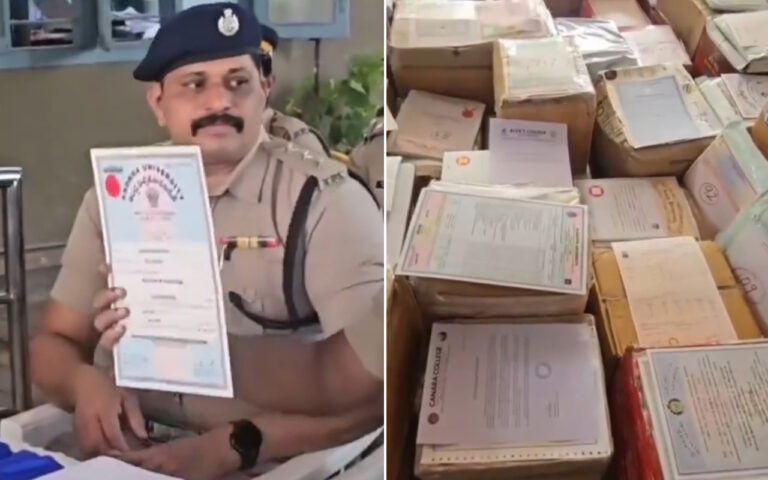
Police in Kerala seized more than 100,000 fake certificates linked to 22 educational institutions in a multi-state operation in December, and said the syndicate may have supplied fake documentation to 1 million people across India.
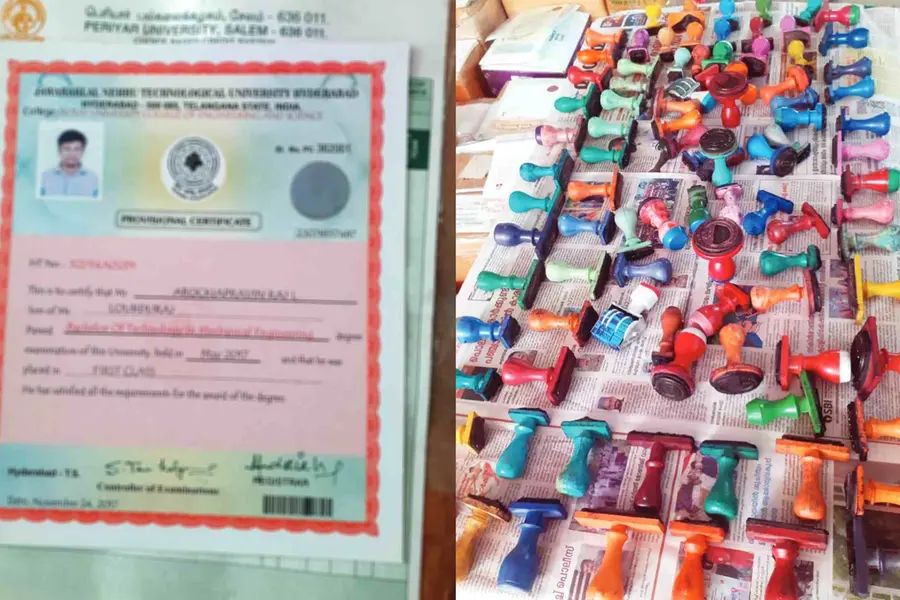
Police in India have allegedly seized 100,000 forged certificates from 22 universities, with 1 million plus likely used for jobs abroad.
I warned about this in August (and asked questions during October Estimates) — 23,000 foreign students in Australia were found with… pic.twitter.com/nJj6BHvGiV
— Malcolm Roberts 🇦🇺 (@MRobertsQLD) January 6, 2026
Phil Honeywood, CEO of the International Education Association of Australia (IEAA), told The Koala News he had discussed the changes with Julian Hill, Assistant Minister for International Education, who visited India with Home Affairs officials last month.
“The Minister made it clear that Australia has now become the least worst country of choice amongst the Big 4 (USA, UK, and Canada). On his recent trip through South Asia, he was provided with what he believes to be clear evidence of an upsurge in fraudulent financial and academic aspects of applications,” he said.
“As a result, he has a strong view that the only way to better filter genuine students is for documentary evidence to be prioritised.”
Ravi Lochan Singh, CEO of major migration agency Global Reach, said he was surprised that Nepal and Bangladesh were affected as students from those countries had an “exceptionally high” visa success rate, and said it could be related to students applying for protection visas due to political turmoil.
He also confirmed that fraud was “evolving” and becoming more difficult to detect.
“At this time we are detecting two distinct types of fraud: 1) financial documents that appear to be genuine and due to complicity of bank officials, they somehow pass the verification by agents and universities,” he said.
“[Secondly], ‘search funds’, is more sophisticated. we have observed instances where students seeking funds approach search fund agents who check funds held by unrelated individuals in various banks using the same name (e.g., parents or grandparents of the applying student). The funds are genuine but do not belong to the student’s family. This type of fraud is challenging to detect.”
Pro-multiculturalism and mass migration former Immigration Department deputy secretary Dr Abul Rizvi told news.com.au the change was “highly unusual” and could be linked to the Indian fake degree mill.
“It is possible, although my suspicion is very few of the people who apply to study in Australia would have gotten a dodgy degree in India, because they risk that being investigated and caught out,” he said.
“[The heightened scrutiny] will mainly be financial capacity and academic background, it’ll be less likely to be the English language test.”
Header image: Left, right, the fake degree bust in India (DDNews).