Australia could plunge into a year-long recession within months due to the war in Iran, a top economist at a global banking giant has warned.
Paul Bloxham, HSBC Chief Economist for Australia, New Zealand and Global Commodities, said the ongoing conflict in the Middle East was creating an “ugly scenario” where inflation caused by high oil prices forced interest rate hikes, resulting in negative economic growth.
This could result in a recession as early as September that lasts as long as a year, with unemployment rising to 5.5% by early 2027 in a worst-case scenario.
“The longer [the war in Iran] goes on for, the more disruption you should expect,” Mr Bloxham told the Australian Business Network.
“We don’t really know how long it’s going to go on for, and there’s a lot of uncertainty in the economic outlook, but we do know that it has already had an economic effect, and that’s going to mean higher inflation and it’s going to mean weaker economic growth.
“And once you weaken economic activity sharply then that starts to feed through to hiring decisions, and so that would start to weaken employment prospects, and we think that the unemployment rate will climb with that.”
His prediction came days after Westpac CEO Anthony Miller said Australia needed to prepare for the possibility of a recession, while Oxford Economics has warned of a global economic downturn if the war continues for another two months.
“I think there’s a chance of a recession. I think we need to acknowledge that,” Mr Miller told the ABC’s Alan Kohler on a podcast earlier this week.
“It’s much more complicated today because of events in the Middle East over the last few months than it would otherwise have been, so I think it puts more pressure on how [the Reserve Bank] can get us through this environment.”
The next day Westpac chief economist Luci Ellis published a note forecasting three more rate rises by August, on top of the two already made by the Reserve Bank this year.
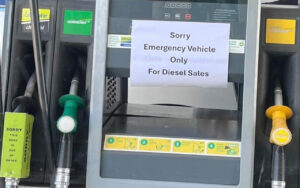
Analysts have warned that inflation could hit 5% later this year if oil prices continue to be disrupted by the conflict, which began last month with US and Israeli strikes against Iran and resulted in the closure of the Strait of Hormuz, affecting 20% of the world’s oil supplies.
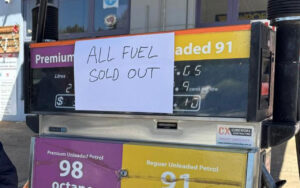
Australians are already being hit hard by an ongoing cost-of-living crisis compounded by rising fuel prices.
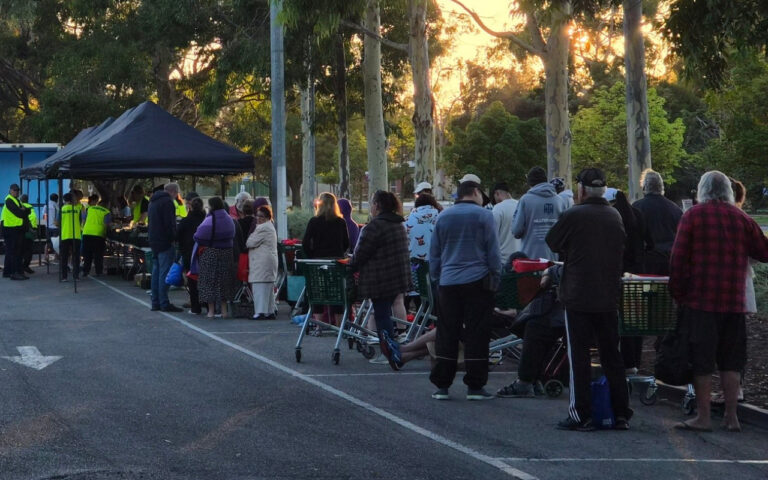
Adelaide food charity Cos We Care told Yahoo late last month food bank lines had doubled, while Melbourne service Reaching Out recently said the number of people using its food services had “grown exponentially”.
Header image: A food bank line in Adelaide last month (Cos We Care).