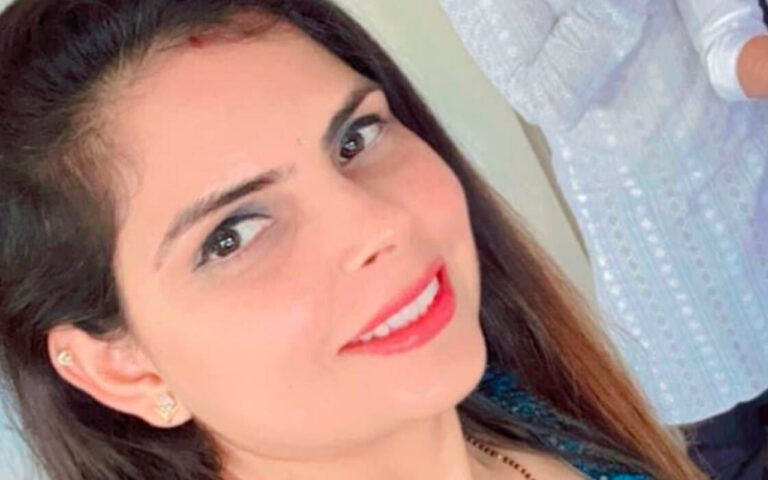
An Indian woman who tried to hack a toddler to death with a meat cleaver has been jailed for just five years in New Zealand after claiming the attack was caused by the “stresses and strains” of leaving her home country.
Alka Dahiya faced the High Court in Hamilton on Thursday after pleading guilty to attempted murder over the horrific July 2024 attack, which left the child with deep wounds to his neck, face and wrist.
She lost a bid to have her identity hidden forever by the court, and her victim, who was known to her, still cannot be named due to an automatic suppression order, The New Zealand Herald reported.
The court heard Dahiya selected the sharpest blade she owned, sat the child down on a yoga mat, attacked the boy until he was unresponsive, and then harmed herself. She was hospitalised, informally diagnosed with an adjustment disorder and depressed mood, and released three days later with medication.
But Dahiya’s lawyer Richard Barnsdale argued his client should be given a sentence of home detention, and told the court Dahiya had moved to a “strange country” and was learning a new language, which along with other factors “led her to do the unthinkable”.
He conceded the attack was “very serious” and that the victim was lucky to be alive, but submitted that the culmination of a failed marriage in India, moving to New Zealand and entering an arranged marriage, and struggles to learn English caused Dahiya to experience a “momentary psychological problem”.
“All of this combined would have added to that moment in 2024 when she went through a black period and she got depressed,” Mr Barnsdale told the court.
He submitted that the attack was a “one-off” and was the result of “an accumulation of stresses and strains of a person leaving their home country”.
Mr Barnsdale also told the court his client hoped to become an early childhood teacher.
Crown solicitor Jacinda Hamilton told the court the child’s injuries showed Dahiya had intended to kill, called the attempted murder “calculated” and premeditated in a “frankly, brutal way”, and said it was an example of “grave violence against a vulnerable child”.
“It’s fortunate that it’s an attempted murder rather than something else,” she told the court.
Justice Mathew Downs noted in sentencing that the victim suffered significant scarring to his neck and suffered a brain injury, and set an overall starting sentence of 10 years and six months’ imprisonment, significantly lower than the maximum sentence of 14 years.
He then applied a 24% discount for mental health factors, reducing the starting sentence to eight years, after referring to a psychiatrist’s report which stated that Dahiya suffered an “acute psychological crisis” driven by negative beliefs about her self-worth and a low mood, causing her to feel she was a burden.
He then applied further discounts, including 15% for an early guilty plea, to arrive at the final sentence of five years and one month.
Offenders jailed in New Zealand are eligible for parole after serving one-third of their sentence, meaning Dahiya could walk free in less than two years.
Header image: Alka Dahiya.