Australia’s Labor government is drafting new “online safety” laws, and its internet censorship chief is demanding more powers to force social media companies to remove content.
The proposed Digital Duty of Care scheme would require tech companies to “provide a safe online environment” by identifying and preventing so-called harmful content before it is published, rather than by responding to individual complaints, according to a consultation paper released last month.
The reforms sparked free speech and online privacy concerns when they were first announced last year, and more than 11,000 Australians signed a petition warning they moved Australia towards UK and EU-style censorship, and gave eSafety Commissioner Julie Inman Grant too much power.
Ms Inman Grant has regularly called for tougher online safety laws, and last week became emotional during an appearance before the Royal Commission into Antisemitism and Social Cohesion, where she said she needed more tools to force tech companies to comply with her office’s demands.
She said officials had told a meeting with Communications Minister Anika Wells, who is behind the Digital Duty of Care bill, and anti-Semitism envoy Jillian Segal earlier this year that the reforms could take up to two years to implement, which Ms Segal said was “too long” for the Jewish community.
Among Ms Inman Grant’s recommendations was an EU-style mandatory code of conduct against hate that she said she could “roll out tomorrow” to force platforms such as X to remove content, and used the example of footage of the assassination of Charlie Kirk.
“Through the use of recommender systems, the algorithms … [the social media companies are] monetising the pain and suffering of other people,” she told the commission.
“They can target us all with deadly precision – they have the ability to do this now. We should ask them to do this, to stem the tide.
“We’ve got the most powerful technology … owned by the richest, wealthiest technologists in the world, but we’ve never had looser guardrails.”
Ms Inman Grant, an unelected American-born bureaucrat who takes home a taxpayer-funded salary of $536,000 a year, told the commission her office received 108,000 complaints about harmful online content in the year to June 30, up from about 55,000 the previous year.
She said much of the “harmful” material ended up in “purgatory”, meaning it was not severe enough to meet her office’s threshold for removal, but still in breach of the platforms’ own terms of service.
Ms Wells last year rejected claims the Digital Duty of Care would force Australians to provide government identification to use social media, but the consultation paper highlights the potential of anonymous and pseudonymous accounts to cause “serious harm”, and allows her to expand categories of harm covered by the scheme.
Privacy and free speech advocates have expressed concerns about loss of anonymity online and the potential for the government to broaden the scope of the scheme without new legislation, and an industry source told The Sydney Morning Herald there were concerns Labor was attempting to use the Digital Duty of Care to revive its failed misinformation and disinformation bill.
Peter Kurti, program director at think tank the Centre for Independent Studies, said the online safety reforms should not be a means for the government to regulate lawful speech via the backdoor.
“Anonymity should not mean impunity, but I would not want to see people forced to identify themselves before joining public debate,” he said.
Dr Alexander Hatzikalimnios, a legal academic at the ASA Institute of Higher Education, also warned it was “potentially dangerous” to include vague terms in the draft provisions such as “threat to public safety” and “serious harm”.
“Defining the parameters will make or break whether this legislation or these amendments to the online safety act will be an effective tool at protecting children, or can all be an effective tool at weaponising censorship,” he said.
“Giving someone the power to change what content would be a serious, harmful threat is really dangerous because it can be highly politicised.”
The commission heard the Digital Duty of Care bill is expected to be introduced at the end of the year, but if passed would not come into effect for 12 months after that.
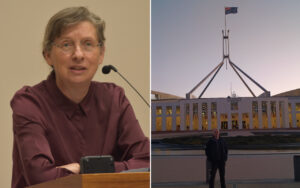
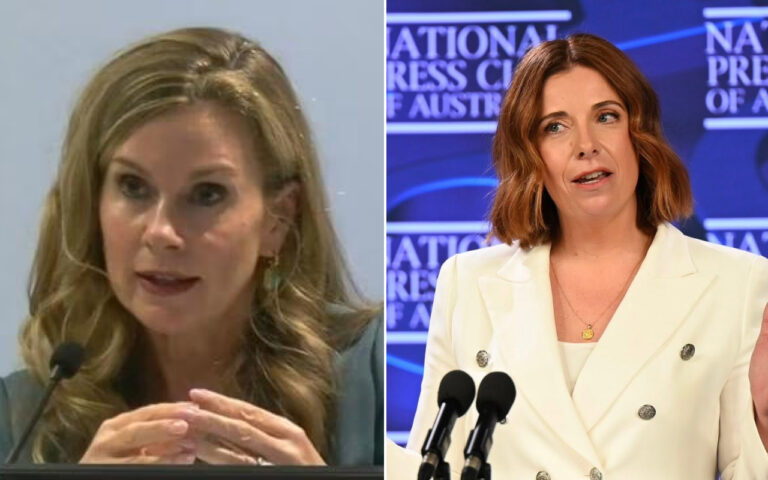
Header image: Left, Julie Inman Grant at the Royal Commission (Royal Commission). Right, Anika Wells at the National Press Club last year (Facebook).