One of Australia’s most eminent legal experts has raised serious concerns about Labor’s proposed new “hate groups” laws and warned they could be used by future governments to ban their political opponents.
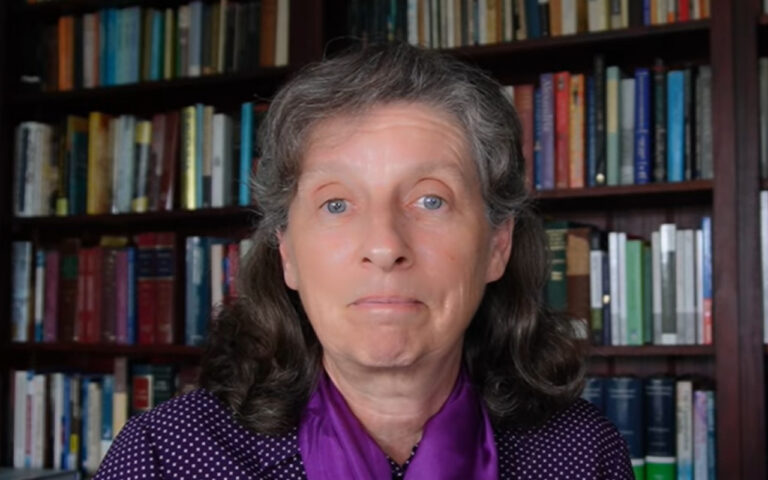
Dr Anne Twomey, Professor Emerita in Constitutional Law at the University of Sydney, analysed the Prohibited Hate Groups component of Prime Minister Anthony Albanese’s Combatting Antisemitism, Hate and Extremism Bill 2026 in a video posted on her YouTube channel on Sunday.
The laws allow the Home Affairs Minister to outlaw organisations that have engaged in loosely defined “hate crimes”, whether or not the conduct was illegal at the time, and with no criminal conviction or procedural fairness required, and the laws are punishable with jail terms of up to 15 years.
The video was recorded before the government split the bill between gun law reforms and the “hate speech” legislation and removed a serious racial vilification offence, resulting in Dr Twomey adding a prologue explaining the dropped offence could no longer trigger a “hate group” ban.
In the video Dr Twomey highlighted several controversial elements of the legislation, and gave an example of how a party in power could use the laws to ban their main rivals, warning there was a “real risk they could be abused in the future”.
“So let’s imagine an extreme example. Many years from now Party Z is elected and wins control over both houses of parliament after claiming there’s a security crisis and you need a strong government and strong leadership,” she said.
“Party Z then decides it wants to get rid of the main opposition party, Party Y. Party Y is an unincorporated body. Many years ago, one of its ministers publicly stated that gang violence in Victoria by a particular ethnic group was making people afraid to leave their homes.
“Community leaders of that ethnic group claimed that this led to heightened risks of violence against their members and fear in the community for its safety.”
Dr Twomey explained that with a “political crony” appointed as Director-General of Security and a “strong Party Z adherents” as Minister and Attorney-General, Party Z could declare Party Y a prohibited hate group based on an assessment that its activities increase the risk of politically motivated violence.
“The Minister does so on the basis of conduct that happened in the past which was not then an offence and hasn’t been determined to be an offence by any court, but which the Minister has decided is a ‘hate crime’,” she continued.
“The Minister also advises that he or she is satisfied that it is reasonably necessary to declare Party Y a prohibited hate group to prevent economic harm to Australia, because the minister regards Party Y’s economic policies as bad in the circumstances.”
But Dr Twomey added that such a scenario would not come about, because the laws would inevitably be challenged in the High Court.
“The court would be likely to strike down the validity of any provisions that permitted the banning of a political party, as it would burden the free choice by the people of their political representatives,” she said,
“Indeed, all those people who rail against the implied freedom of political communication and the implications the High Court has drawn from Section 7 and 24 of the Constitution might become particularly grateful for their existence if they end up being targeted in the future under this legislation.
“But the bottom line is it’s just not wise to try to achieve a short-term political aim by putting in the statute book laws that could be egregiously abused in the future. Politicians need to take a breath, look to the long term, and see what they are potentially doing.”
Earlier in the video Dr Twomey also pointed out that the Local Council of Australia had described the definition of “advocacy of a hate crime”, which can be used to justify banning a group, as “unacceptably vague”.
She described inclusion of conduct before it became a crime as “alarming”, warned an “unincorporated body” as stated in the legislation could see unions, political parties, religious congregations and local school groups be eligible to be proscribed, and said there were further problems with the definition of an informal member” of a group, saying it could define people as being members “without even knowing it”.
“Basically, the Minister gets to decide what is conduct that amounts to a ‘hate crime’ for the purpose of banning an organisation, even though no one’s been convicted of a ‘hate crime’ and no ‘hate crime’ has occurred,” she said,
The proposed laws have already forced the disbandment of the National Socialist Network (NSN), and former leader Thomas Sewell has begun raising funds for a High Court challenge as an individual.
Home Affairs Minister Tony Burke said last week the “hate groups” laws were written specifically to allow him to proscribe the NSN and Muslim group Hizb ut-Tahrir, which he had been previously unable to ban because they had not broken the law, incited violence, or committed acts of terror.
Header image: Dr Anne Twomey (Constitutional Clarion – YouTube).